
Rational Software Architect (RSA) is an IBM enterprise software design tool that uses UML modeling and model-driven development to help teams design, visualize, generate, analyze, and maintain complex software applications efficiently.
Modern software projects are becoming increasingly complex. Enterprise applications often involve thousands of classes, multiple development teams, cloud services, APIs, databases, and distributed systems. Writing code without proper planning can lead to maintenance issues, security risks, and expensive redesigns.
This is where IBM Rational Software Architect (RSA) becomes valuable. If you’ve ever wondered what is Rational Software Architect, the simple answer is that it is a comprehensive software modeling and development platform created by IBM. It enables software architects, developers, and enterprise teams to visually design applications before writing large amounts of code.
Unlike traditional Integrated Development Environments (IDEs) that primarily focus on coding, Rational Software Architect combines UML modeling, Model-Driven Development (MDD), code generation, reverse engineering, enterprise architecture, and collaborative software design into a single platform.
This guide explains everything you need to know, including how Rational Software Architect works, its architecture, major features, benefits, use cases, and why many enterprise organizations continue to rely on it for complex software development.
What Is Rational Software Architect?
Rational Software Architect (RSA) is an enterprise-grade software modeling and development tool developed by IBM. It provides a visual approach to software architecture using Unified Modeling Language (UML) while supporting the complete software development lifecycle.
Instead of beginning with thousands of lines of code, software teams first create models representing the application’s structure, workflows, components, and relationships. These models can then be transformed into executable code, reducing development errors and improving consistency.
At its core, Rational Software Architect helps organizations:
- Design enterprise applications
- Create UML diagrams
- Generate source code automatically
- Reverse engineer existing applications
- Improve collaboration among development teams
- Maintain architectural consistency
- Reduce software complexity
The platform is widely used for large-scale enterprise systems where planning and architecture are as important as coding itself.
History of IBM Rational Software Architect
IBM introduced Rational Software Architect as part of its Rational software development portfolio to improve enterprise software engineering.
Before visual modeling tools became common, software projects relied heavily on documentation and manually written code. As applications became larger and more interconnected, developers needed better ways to visualize system architecture.
IBM designed Rational Software Architect to solve this challenge by combining:
- Visual software modeling
- Enterprise architecture
- Software development
- UML standards
- Model-driven engineering
One of RSA’s biggest advantages was its integration with the Eclipse platform, allowing developers to use familiar IDE functionality while adding powerful modeling capabilities.
Over time, IBM expanded RSA to support:
- Java enterprise applications
- Service-oriented architecture (SOA)
- WebSphere environments
- Cloud-ready architectures
- Team collaboration
- Software lifecycle management
Although newer cloud-native design tools have emerged, many organizations still use Rational Software Architect for maintaining large enterprise systems.
How Rational Software Architect Works
Understanding what Rational Software Architect is becomes easier when you understand its workflow. Instead of writing source code immediately, developers first design the software visually.
A typical development process follows these steps:
Step 1: Requirements Analysis
Business requirements are gathered from stakeholders.
Examples include:
- User authentication
- Customer management
- Inventory tracking
- Payment processing
- Reporting dashboards
Step 2: UML Modeling
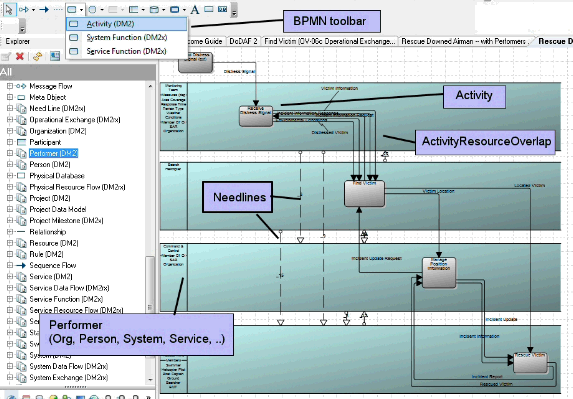
Software architects create UML diagrams representing:
- Classes
- Objects
- Components
- Workflows
- System interactions
These diagrams serve as blueprints for developers.
Step 3: Architecture Design
Architects define:
- Software layers
- Business logic
- Data flow
- Service architecture
- Database interactions
- External APIs
This stage ensures scalability before development begins.
Step 4: Model-Driven Development (MDD)
Rather than manually writing every class, Rational Software Architect can generate portions of source code directly from UML models. This dramatically reduces repetitive coding tasks.
Step 5: Code Generation
RSA converts visual models into programming languages such as:
- Java
- C++
- C#
Generated code remains consistent with the architectural design.
Step 6: Reverse Engineering
One of RSA’s strongest capabilities is reverse engineering. Instead of creating diagrams from scratch, existing applications can be analyzed to automatically generate UML diagrams from the source code. This feature helps organizations document legacy systems.
Step 7: Continuous Updates
As software evolves, developers update both:
- Source code
- Architecture models
This keeps documentation synchronized with development.
Core Architecture of Rational Software Architect
IBM Rational Software Architect follows a layered architecture that separates modeling from implementation.
Its core components include:
1. Presentation Layer
This provides:
- UML editors
- Diagram viewers
- Modeling tools
- Visual project navigation
Architects interact with software through graphical diagrams rather than raw code.
2. Modeling Layer
The modeling engine manages:
- UML elements
- Relationships
- Classes
- Components
- Packages
- Design validation
This is where architectural decisions are stored.
3. Development Layer
The development layer handles:
- Java development
- Code generation
- Source editing
- Reverse engineering
- Validation
Developers can switch seamlessly between diagrams and source code.
4. Integration Layer
RSA integrates with enterprise development tools including:
- Version control systems
- Build tools
- IBM software products
- Eclipse plugins
- WebSphere environments
This makes it suitable for enterprise software ecosystems.
Key Features of Rational Software Architect
IBM Rational Software Architect includes a wide range of enterprise-level capabilities.
Visual UML Modeling
RSA supports nearly every major UML diagram used in enterprise software engineering.
These include:
- Class diagrams
- Sequence diagrams
- Use case diagrams
- Activity diagrams
- State diagrams
- Component diagrams
- Deployment diagrams
These visual models improve communication between developers, architects, and business stakeholders.
Model-Driven Development (MDD)
One of RSA’s defining features is Model-Driven Development (MDD). Instead of manually coding every application component, developers first create abstract software models. The software then transforms these models into executable code.
Benefits include:
- Faster development
- Reduced coding errors
- Consistent architecture
- Easier maintenance
Code Generation
Automatic code generation improves productivity by producing standardized source code directly from UML diagrams.
Generated components often include:
- Classes
- Interfaces
- Packages
- Methods
- Object relationships
Developers can then customize the generated code as needed.
Reverse Engineering
Reverse engineering works in the opposite direction. Instead of generating code from models, RSA analyzes existing code and creates UML diagrams automatically.
This feature is especially useful for:
- Legacy applications
- Enterprise maintenance
- Documentation updates
- System modernization
Eclipse-Based Development Environment
Because Rational Software Architect is built on the Eclipse framework, developers benefit from:
- Plugin support
- Familiar interface
- Flexible workspace
- Java development tools
- Third-party integrations
This reduces the learning curve for Eclipse users while expanding enterprise modeling capabilities.
UML Modeling in Rational Software Architect
Unified Modeling Language (UML) is the foundation of Rational Software Architect.
UML allows architects to represent software visually before implementation.
Common UML diagrams supported include:
| UML Diagram | Purpose |
| Class Diagram | Models classes, objects, and relationships |
| Sequence Diagram | Shows interaction between system components |
| Use Case Diagram | Represents user interactions |
| Activity Diagram | Visualizes workflows and business processes |
| State Diagram | Tracks object behavior over time |
| Component Diagram | Shows software modules |
| Deployment Diagram | Represents deployment architecture |
Using UML improves communication among developers, project managers, analysts, and stakeholders because everyone understands the system structure before coding begins.
Model-Driven Development (MDD) Explained
Model-Driven Development is one of the biggest reasons organizations adopt Rational Software Architect.
Instead of writing everything manually:
- Architects design software models.
- Models are validated.
- Code is generated.
- Developers customize implementation.
- Models remain synchronized throughout development.
This methodology reduces duplication while improving software quality and maintainability.
Model-driven development is particularly useful for:
- Banking software
- Healthcare systems
- Government platforms
- Insurance applications
- Manufacturing systems
- Enterprise ERP solutions
These industries require consistent architecture, detailed documentation, and long-term maintainability.
Code Generation and Reverse Engineering
A major strength of Rational Software Architect is its ability to bridge the gap between visual design and implementation.
Code Generation Benefits
Automatic code generation helps developers:
- Reduce repetitive coding
- Maintain consistency
- Accelerate project delivery
- Improve software quality
- Standardize development practices
Reverse Engineering Benefits
Reverse engineering provides equal value for organizations maintaining older software.
Benefits include:
- Understanding undocumented systems
- Visualizing legacy code
- Simplifying maintenance
- Supporting modernization projects
- Improving architecture documentation
Together, these capabilities allow development teams to move smoothly between diagrams and source code, making Rational Software Architect a practical tool for both new projects and long-term enterprise maintenance.
Eclipse-Based Architecture
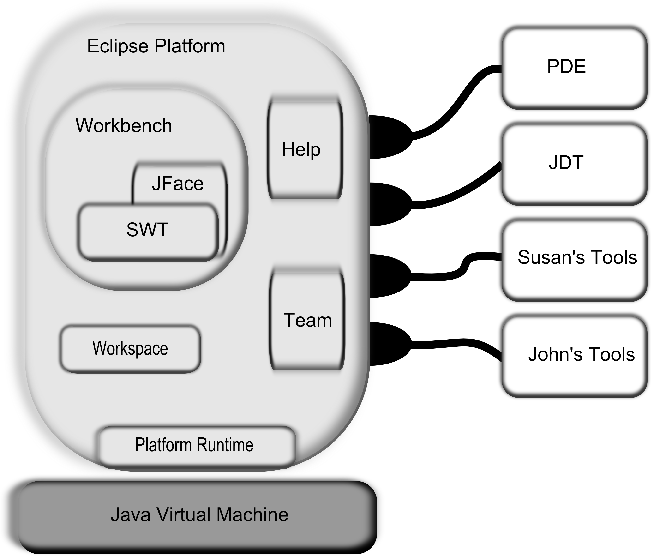
One of the defining characteristics of IBM Rational Software Architect (RSA) is that it is built on the Eclipse platform. Eclipse is an open-source Integrated Development Environment (IDE) widely used by software developers. By leveraging Eclipse, RSA combines visual modeling capabilities with a familiar coding environment, making it easier for teams to transition between software design and implementation.
Unlike standalone modeling tools, RSA allows developers to create UML diagrams, edit source code, debug applications, and integrate third-party plugins within the same workspace. This reduces context switching and improves developer productivity.
Key Advantages of Eclipse Integration
- Familiar interface for Java developers
- Extensive plugin ecosystem
- Integrated debugging tools
- Source code editing
- Version control integration
- Enterprise project management
- Flexible workspace customization
This architecture enables organizations to adapt Rational Software Architect to their development processes while supporting enterprise-scale applications.
Benefits of Using Rational Software Architect
Organizations invest in Rational Software Architect because it improves software quality while reducing development complexity. Below are the key benefits.
1. Simplifies Complex Software Design
Large enterprise applications often contain thousands of interconnected components. RSA provides visual diagrams that simplify system architecture and make complex designs easier to understand.
Instead of relying solely on source code, architects can visualize the complete application before development begins.
2. Improves Team Collaboration
Software projects usually involve multiple stakeholders, including:
- Software architects
- Developers
- QA engineers
- Business analysts
- Project managers
RSA provides a common visual language using UML diagrams, enabling all team members to understand the software architecture without reading complex code.
3. Accelerates Development
Model-driven development allows developers to generate portions of source code automatically, reducing repetitive tasks and improving consistency across projects.
Benefits include:
- Faster development cycles
- Standardized coding practices
- Reduced manual effort
- Improved software quality
4. Enhances Documentation
Maintaining documentation is one of the biggest challenges in software engineering. Since diagrams remain connected to the application’s architecture, documentation becomes easier to update and maintain throughout the software lifecycle.
5. Supports Enterprise Standards
Many large organizations follow strict software development standards.
RSA supports:
- Enterprise architecture
- Software governance
- Compliance requirements
- Documentation standards
- Design validation
These capabilities make it suitable for industries where software quality and traceability are essential.
6. Reduces Development Risks
Visual modeling allows architects to identify design flaws before implementation begins.
This helps reduce:
- Costly redesigns
- Integration issues
- Performance bottlenecks
- Architectural inconsistencies
Detecting issues early saves both time and development costs.
Real-World Use Cases of Rational Software Architect
Although many modern cloud-based tools exist today, Rational Software Architect remains valuable for enterprise environments.
Enterprise Software Development
Large corporations use RSA to design:
- ERP systems
- CRM platforms
- Financial applications
- Human Resource Management Systems (HRMS)
- Supply chain software
The ability to model complex business processes makes RSA ideal for enterprise applications.
Banking and Financial Services
Banks require secure, scalable, and well-documented software systems.
RSA helps architects model:
- Transaction processing
- Customer management
- Risk analysis
- Payment gateways
- Security workflows
Visual modeling ensures that critical financial systems are thoroughly planned before deployment.
Healthcare Applications
Healthcare software often involves sensitive patient information and strict compliance requirements.
RSA supports:
- Electronic Health Records (EHR)
- Hospital management systems
- Medical billing platforms
- Laboratory management software
Proper architectural planning helps maintain data integrity and regulatory compliance.
Government Projects
Government organizations often manage large-scale systems with long development lifecycles.
RSA assists in:
- Public service platforms
- Citizen databases
- Tax management systems
- Defense applications
- Identity management solutions
Its documentation and governance features are especially valuable in regulated environments.
Telecommunications
Telecommunication providers use enterprise architecture tools to model:
- Customer billing systems
- Network management
- Subscriber services
- Infrastructure planning
RSA helps simplify these complex systems through visual modeling.
Rational Software Architect vs Modern Alternatives
Technology has evolved significantly, and several modern tools now compete with RSA. However, Rational Software Architect still offers strengths for organizations that rely on structured enterprise modeling.
| Feature | Rational Software Architect | Modern Cloud-Based Tools |
| UML Modeling | Excellent | Good |
| Code Generation | Advanced | Moderate |
| Reverse Engineering | Strong | Limited |
| Enterprise Documentation | Excellent | Good |
| Cloud Collaboration | Moderate | Excellent |
| Eclipse Integration | Native | Rare |
| Plugin Support | Extensive | Depends on Platform |
| Enterprise Governance | Strong | Varies |
While cloud-native tools often provide easier collaboration, RSA remains a preferred choice for organizations requiring detailed architecture, governance, and long-term maintainability.
Advantages and Limitations
Understanding both the strengths and limitations of Rational Software Architect helps organizations determine whether it aligns with their needs.
Advantages
- Comprehensive UML modeling
- Enterprise-grade architecture support
- Model-driven development (MDD)
- Automatic code generation
- Reverse engineering capabilities
- Eclipse-based environment
- Strong documentation features
- Extensive plugin ecosystem
- Excellent for large enterprise projects
- Supports collaborative software development
Limitations
- Steeper learning curve for beginners
- Primarily designed for enterprise environments
- Can be resource-intensive on older hardware
- Less focused on lightweight agile workflows
- Cloud-native collaboration is not as seamless as some modern SaaS tools
For organizations with complex software ecosystems, these limitations are often outweighed by its robust architecture and modeling capabilities.
Best Practices for Using Rational Software Architect
To maximize the value of RSA, consider these best practices:
Start with Clear Requirements
Gather detailed business and technical requirements before creating models. Well-defined requirements reduce redesign efforts later in the project.
Use Standard UML Diagrams
Choose the appropriate UML diagram for each stage of development to improve communication and maintain consistency.
Keep Models Updated
As the code evolves, update the corresponding models to ensure documentation remains accurate and useful.
Integrate with Version Control
Store models and source code in a version control system to support collaboration, change tracking, and rollback when necessary.
Automate Where Possible
Take advantage of code generation and reverse engineering features to reduce manual work and maintain alignment between design and implementation.
Common Challenges and How to Overcome Them
Even experienced teams may encounter challenges when adopting Rational Software Architect.
Challenge: Complex Initial Setup
Solution: Create a standardized project template and configure plugins before development begins.
Challenge: Outdated Documentation
Solution: Schedule regular architecture reviews and synchronize UML models with source code.
Challenge: Learning UML
Solution: Provide team training and use simple diagrams before progressing to advanced modeling techniques.
Challenge: Managing Large Projects
Solution: Organize models into logical packages and use modular architecture to improve maintainability.
Future of Rational Software Architect
Although the software development landscape continues to evolve with cloud-native platforms, AI-assisted coding, and DevOps automation, enterprise modeling remains an essential discipline.
Future trends influencing software architecture include:
- AI-assisted software design
- Cloud-native enterprise architecture
- Hybrid development environments
- Automated architecture validation
- Digital twins for enterprise systems
- Improved integration with DevOps pipelines
- Enhanced collaboration features
- Security-by-design methodologies
Organizations maintaining large legacy systems or building mission-critical applications will continue to benefit from structured modeling tools like Rational Software Architect, especially where documentation, governance, and long-term maintainability are priorities.
FAQs:
1. What is Rational Software Architect used for?
Rational Software Architect is primarily used to design, model, and develop enterprise software applications. It supports UML diagrams, code generation, reverse engineering, and collaborative development, enabling software architects and developers to build scalable, well-structured systems with improved accuracy and efficiency.
2. Is Rational Software Architect still relevant today?
Although many organizations now use newer modeling tools, Rational Software Architect remains relevant for enterprises maintaining IBM-based environments, legacy applications, and model-driven development workflows. It continues to support complex software architecture projects requiring structured design and documentation.
3. What are the main features of Rational Software Architect?
Its key features include UML modeling, model-driven development (MDD), automatic code generation, reverse engineering, Eclipse-based extensibility, architecture validation, collaborative development, lifecycle management, and integration with IBM development tools for enterprise software engineering projects.
4. How does Rational Software Architect improve software development?
Rational Software Architect improves development by helping teams visualize software architecture before coding, detect design issues early, automate repetitive coding tasks, enhance collaboration, maintain documentation, and simplify the management of large-scale enterprise software development projects.
5. How is Rational Software Architect different from a traditional IDE?
Unlike traditional IDEs that primarily focus on coding, Rational Software Architect emphasizes visual software modeling, architectural planning, UML-based design, model-driven development, and automated code generation, making it ideal for designing large and complex enterprise applications.
Conclusion:
IBM Rational Software Architect remains one of the most comprehensive enterprise modeling and software architecture tools available. By combining UML modeling, model-driven development, reverse engineering, and automated code generation, it enables development teams to create scalable, maintainable, and well-documented applications. While modern alternatives have emerged, RSA continues to provide significant value for organizations relying on enterprise architecture and IBM ecosystems. Understanding its features, benefits, and use cases helps businesses and software professionals make informed decisions about adopting the right software design solution.
Related Post:
- Python Software Issue 0297xud8 – Troubleshooting Guide & Solutions!
- Why Immorpos35.3 Software Implementations Fail – Full Guide!
- How To Use Immorpos35.3 Software – Complete Guide!
 EchoLinkers
[…] What is Rational Software Architect – Complete Guide! […]
[…] What is Rational Software Architect – Complete Guide! […]
[…] What is Rational Software Architect – Complete Guide! […]