
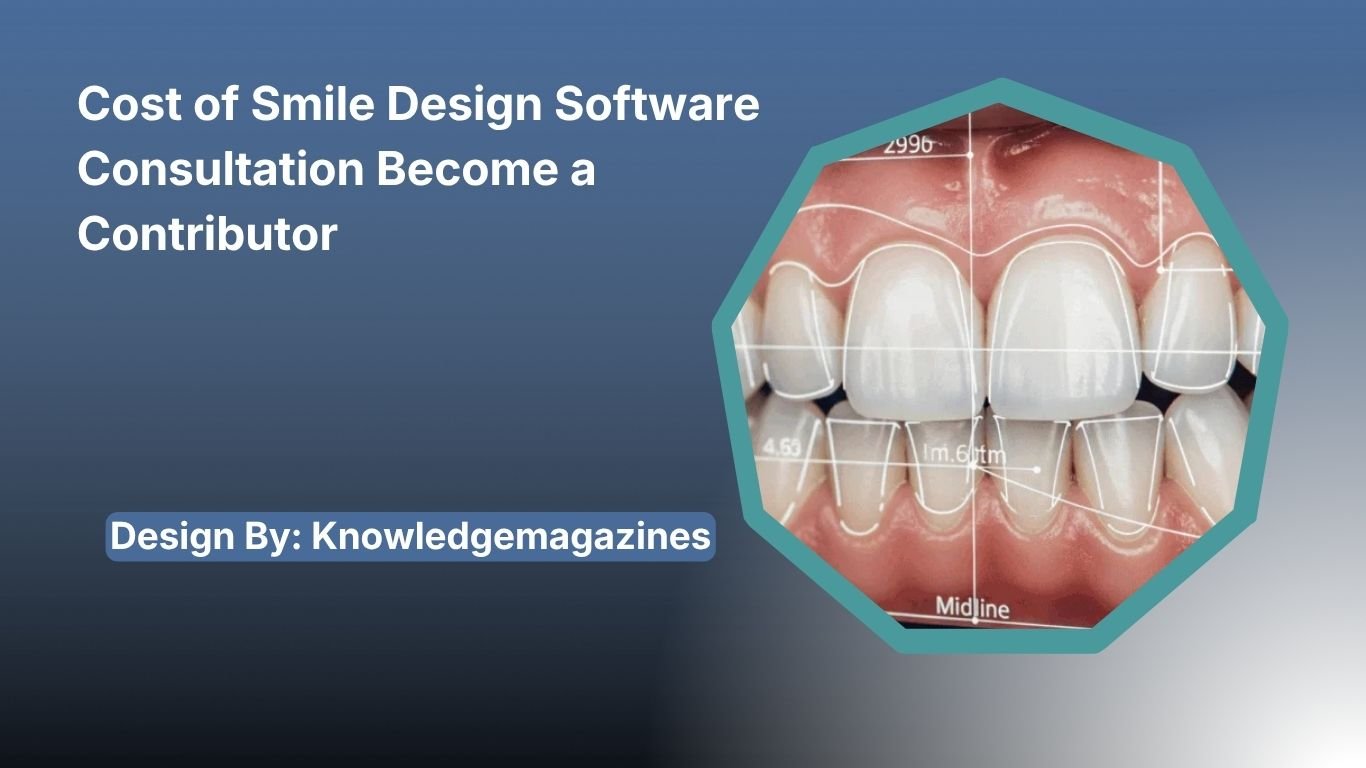
If you’ve searched for the cost of smile design software, consultation, and how to become a contributor, you’ve probably noticed the answers are scattered across a dozen different pages one for software pricing, another for DSD Clinic certification, a third for patient treatment costs, and almost nothing that actually explains how to become a paid contributor in this space.
This guide puts all three pieces together in one place, with a full cost comparison table, a working ROI calculator, and a decision scorecard you won’t find anywhere else.
Whether you’re a dentist evaluating a 2D chairside app, a practice owner considering a full DSD Clinic membership, or a clinician who wants to turn your expertise into published content and thought leadership, this breakdown walks through exactly what you’ll pay and what you’ll get back.
What Is Smile Design Software and Why Do Costs Vary So Much?
Digital smile design (DSD) software lets dentists turn a patient photo or 3D scan into a realistic preview of their future smile before any treatment begins. That’s the entire category but the tools inside it range enormously in sophistication, which is exactly why the smile design software pricing you’ll find online swings from $35 a month to $6,000 a month.
At the simple end, apps like the DSD App or DTS Pro 2D let you overlay a digital smile design on a patient photo in minutes, using templated tooth libraries and basic geometry tools. At the complex end, platforms like Smilecloud, exocad Smile Creator, and full DSD Clinic memberships combine AI-assisted biometric design, 3D intraoral scan integration, CBCT data, video simulation, and lab-ready CAD/CAM exports plus coaching, consultancy, and certification built around the software.
The confusion most dentists run into isn’t “which software is best” it’s not realizing that software licensing, consultation, and certification are three separate cost buckets that get bundled together in marketing copy. Separating them is the first step to budgeting accurately.
Smile Design Software Pricing: A Side-by-Side Cost Comparison
No single vendor page shows you every option next to each other so here’s the comparison that’s currently missing from the market.
| Platform | Entry Tier | Higher Tier | Renewal / Recurring Note | Best Suited For |
| DSD App / DSD Online | Free app / $35/month | — | Flat monthly fee | Solo dentists wanting fast chairside 2D previews |
| DTS Pro 2D | $48–$49/month (1st year) | $69/month for 2D+3D | Drops to $33–$53/month from year 2 | Practices that want unlimited 2D simulations with an iPad option |
| Smilecloud | Lite plan (storage only) | Starter → Business → Dental Group | File-recovery window grows with tier (14 days → 5 years) | Teams that need biometric AI design plus lab/technician collaboration |
| Smile Designer Pro | $999/year flat | — | 30-day money-back guarantee | Single clinicians who want one predictable annual fee, no tiers |
| exocad Smile Creator | ~$1,950 one-time add-on | — | One-time module cost, not a subscription | Labs and CAD/CAM-integrated clinics doing prosthetic planning |
| DSD Clinic Certification | $6,000/month (implementation, 6–9 months) | $5,000/month (ongoing membership) | Minimum 1-year commitment, then month-to-month | Practices wanting full coaching, planning-center access, and brand affiliation |
The pattern is clear: software alone rarely costs more than $70/month, while anything above $500/month is really paying for coaching, certification, or centralized case-planning services layered on top of the software.
What Does a Smile Design Software Consultation Actually Cost?
“Consultation” means different things depending on who’s selling it, and this is where most buyers get caught off guard.
- Vendor demo calls Almost always free. Software companies want you to see the interface before you buy, so an introductory walkthrough with DTS Pro, Smilecloud, or Smile Designer Pro typically costs nothing.
- Practice implementation audits When a consultant reviews your scanners, lighting setup, staff workflow, and readiness for digital planning, expect a paid engagement. These can run from a few hundred dollars to several thousand per month during onboarding.
- DSD Team Consultancy (in-clinic) A DSD expert travels to your practice for a structured, multi-day training. This runs $8,000–$12,000 as a one-time investment, covering travel, hotel, and the two-day on-site program.
- Individual case planning consultations If you submit a case to a centralized planning hub like the DSD Planning Center, expect a per-case fee of $300–$1,500, depending on complexity this is separate from your monthly software or membership cost.
The rule of thumb: if a consultation is about learning the software, it’s usually free or low-cost. If it’s about implementing a full digital workflow across your team, budget four figures.
DSD Clinic Certification: A Step-by-Step Cost Breakdown
Becoming an officially certified DSD Clinic is the single largest financial commitment in this category, so it’s worth walking through exactly what each stage costs.
Step 1: Discovery Call Free
You speak with a DSD Clinic Executive, complete a pre-qualification application, and confirm eligibility (practice ownership, an existing digital scanner, and readiness to start immediately).
Step 2: Implementation Period $6,000/month for 6–9 months
This covers monthly coaching calls, a personalized curriculum, action items, and hands-on consultancy designed to embed DSD workflows across your whole team.
Step 3: Ongoing DSD Clinic Membership $5,000/month
Once you pass certification with a scorecard rating above 80%, your monthly fee drops, and you unlock the DSD Planning Center, interdisciplinary case support, and official DSD Clinic status.
Optional: DSD Provider Courses $700 (on-demand) to $2,900 (in-person)
Not required before certification, but DSD Clinics receive a 30% discount on these courses if they choose to take them.
How to Calculate Your Smile Design Software ROI (Breakeven Calculator)?
Every pricing page tells you what something costs. None of them tell you how many cases you need to accept before it pays for itself so here’s a simple framework you can apply to any tier above.
Formula: Monthly software or membership cost ÷ average profit margin per accepted case = number of cases needed per month to break even.
| Investment Tier | Monthly Cost | Avg. Case Value (typical veneer case, $9,000 at ~40% margin) | Cases Needed to Break Even |
| Entry 2D app ($49/mo) | $49 | $3,600 profit margin | Well under 1 case/year |
| Smilecloud Starter (est. $150–$300/mo) | ~$225 | $3,600 profit margin | 1 case every ~16 months |
| DSD Clinic Implementation | $6,000 | $3,600 profit margin | ~1.7 cases/month |
| DSD Clinic Membership | $5,000 | $3,600 profit margin | ~1.4 cases/month |
Even at the high end, a practice that already accepts one or two smile-makeover cases a month is close to breakeven on a DSD Clinic membership from case value alone before counting the higher case-acceptance rates that visual previews typically produce. Run this same math with your own average case value to see where your practice actually sits.
Hidden and Recurring Costs Nobody Talks About
The sticker price rarely tells the full story. Watch for these before signing anything:
- Renewal price changes DTS Pro’s first-year promotional rate drops to a lower recurring rate from year two, but not every vendor is this transparent about it.
- Data recovery windows tied to your plan On tiered platforms, losing a case file might mean 14 days of recovery on a lower plan versus a full year (or five years, on enterprise tiers) on a higher one.
- Refund and cancellation terms Some platforms offer a 30-day money-back guarantee; others require a minimum one-year commitment before you can downgrade to month-to-month.
- Currency and region adjustments Certification programs quoted in USD may display different pricing once you log in from another region, so always check the localized rate before budgeting.
- Per-case fees on top of membership Planning-center case fees ($300–$1,500) are billed in addition to your monthly membership, not instead of it.
How to Become a Contributor in the Digital Smile Design Ecosystem?
This is the piece almost every other article on this topic skips entirely and it actually splits into two distinct paths.
Path 1: Becoming a Recognized DSD Provider, Master, or KOL
Inside the DSD ecosystem itself, “contributor” status is an earned, paid credential not a blog byline:
- DSD Provider course ($700–$2,900) is the entry point, giving you access to submit cases to the DSD Planning Center.
- Monthly Provider status ($550–$650/month, or roughly $6,000–$7,000/year) unlocks direct case submission and verified provider recognition.
- DSD Master / Key Opinion Leader (KOL) status is the highest tier fewer than 200 dentists in North America currently hold DSD Master certification. It requires extensive training, submitted case documentation, and a track record of excellence, and it’s the credential that lets clinics market themselves the way Champions for Oral Health does: “certified DSD provider,” “DSD Master,” and featured lecturer status.
- Master Contributor / Certified DSD Clinic enterprise tier (from $6,000/month) grants full brand integration and positions a practice as a recognized clinical contributor within the DSD community itself.
Path 2: Becoming a Published Content Contributor
If your goal is thought leadership rather than clinical certification, the path looks different:
- Pick your lane clinical execution, software ROI, practice management, or patient communication are all distinct angles editors look for.
- Build a portfolio first one or two well-documented case studies or cost breakdowns (like this one) demonstrate real expertise before you pitch anyone.
- Target dental-specific outlets dental technology blogs, clinical journals, and practice-management portals are far more likely to publish a working dentist than a generalist tech blog.
- Pitch a specific, timely angle “what smile design software actually costs in 2026” performs better than a generic “benefits of digital dentistry” pitch.
- Follow editorial standards accurate pricing, clear headings, and no unsupported claims are what separate a published contributor from a rejected pitch.
The two paths aren’t mutually exclusive many DSD Masters also become published contributors, using their clinical certification as the credibility that gets their writing accepted in the first place.
Smile Design Software vs. DSD Clinic Membership: A Decision Scorecard
Rather than just listing features, here’s how the main options actually compare across the factors that matter most when you’re deciding where to invest.
| Option | Upfront Cost | Learning Curve | Speed to ROI | Contributor Pathway |
| DTS Pro / Smile Designer Pro (2D) | ★☆☆☆☆ (Low) | ★☆☆☆☆ (Easy) | ★★★★☆ (Fast) | ☆☆☆☆☆ (None built in) |
| Smilecloud (Starter/Business) | ★★☆☆☆ (Low-Med) | ★★☆☆☆ (Moderate) | ★★★☆☆ (Moderate) | ☆☆☆☆☆ (None built in) |
| exocad Smile Creator | ★★★☆☆ (Med, one-time) | ★★★★☆ (Steep) | ★★★☆☆ (Moderate) | ☆☆☆☆☆ (None built in) |
| DSD Provider / Planning Center | ★★★☆☆ (Med) | ★★★☆☆ (Moderate) | ★★★☆☆ (Moderate) | ★★★★☆ (Strong verified provider status) |
| DSD Clinic Certification | ★★★★★ (High) | ★★★★☆ (Structured coaching) | ★★☆☆☆ (Slower, 6–9 mo. runway) | ★★★★★ (Full Master/KOL/brand status) |
If your goal is purely a faster patient-communication tool, the top of this table is where to start. If your goal includes building a recognized professional reputation in digital dentistry, the DSD Provider and Clinic tiers are the only options that actually build toward that.
Frequently Asked Questions:
1. How much does digital smile design software cost per month?
Entry-level 2D tools run $35–$70 per month. Mid-tier collaborative platforms like Smilecloud scale with team size and features. Full DSD Clinic membership runs $5,000–$6,000 per month, which includes coaching and planning-center access, not just software.
2. Is a smile design software consultation free?
Initial vendor demo calls are almost always free. Structured implementation audits, in-clinic team consultancy ($8,000–$12,000), and per-case planning fees ($300–$1,500) are paid services, separate from the free introductory call.
3. How much does it cost to become a certified DSD Clinic?
Budget $6,000/month during the 6–9 month implementation and coaching period, dropping to $5,000/month once certified, with a minimum one-year commitment.
4. Can I become a paid contributor to dental technology publications?
Yes build a portfolio of documented case studies or cost analyses, target dental-specific outlets rather than general tech blogs, and pitch a specific, timely angle. Holding a DSD Provider or Master credential significantly strengthens your credibility with editors.
5. What’s the fastest way to see ROI from smile design software?
Run the breakeven formula above against your own average case value. Most practices that already accept even one cosmetic case a month recover the cost of entry-level software almost immediately, and recover mid-tier memberships within one to two accepted cases.
Final Takeaway:
The cost of smile design software, consultation, and becoming a contributor isn’t one number it’s a layered decision between software licensing, paid consultation, and (if you want it) a genuine credentialed pathway to recognition in the field. Start by separating those three costs, run the breakeven math on your own case volume, and only step up to Clinic-level certification once the ROI math and your ambitions toward contributor status genuinely justify it.
Related Post:
- What is Rational Software Architect – Complete Guide!
- Software Engineers Email List – Complete Guide!
- Winobit3.4 Software Error – Complete Guide to Causes!
 EchoLinkers
[…] articles have connected Incfidelibus with loyalty, trust, philosophy, identity, religion, or even modern internet activity. These subjects can be relevant to the discussion, but they should not automatically be […]