
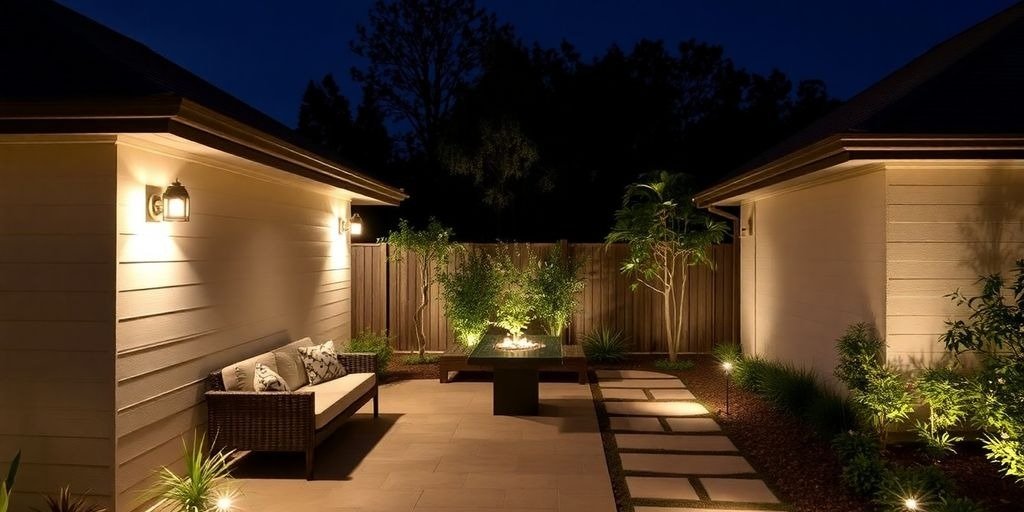
A patio or garden can be one of the most enjoyable parts of a home, but the way it feels can change dramatically after sunset. During the day, sunlight naturally reveals furniture, plants, pathways, walls, and architectural details. At night, those same areas can become flat, overly dark, or uncomfortable if the lighting depends on only one bright fixture.
A better approach is to think about outdoor lighting in layers. Instead of asking one light to illuminate everything, different fixtures can perform different jobs. Some provide practical visibility, others help define seating areas, and some simply make the garden or architecture more interesting to look at.
This approach can make an outdoor space feel more like a true extension of the home rather than a yard that becomes usable only during daylight hours.
Layering different types of outdoor lighting can make patios and gardens more comfortable and visually interesting after sunset.
Begin With the Areas That Need Practical Light
Before thinking about atmosphere, identify the parts of the outdoor space where visibility matters most.
Entrances, steps, doors, cooking areas, and frequently used walkways should normally receive attention first. These are places where people need to see clearly rather than simply enjoy a decorative effect.
A useful way to evaluate the space is to walk through it after dark. Start inside the house, step onto the patio, move toward the garden, and follow the routes normally used by family members or guests.
Notice where you hesitate because a step is difficult to see or where a doorway feels unexpectedly dark. Those locations provide a practical foundation for the lighting plan.
Use Wall Lighting as the Architectural Layer
Exterior walls provide natural locations for permanent lighting because fixtures can illuminate entrances, patios, and architectural surfaces without occupying valuable floor space.
Well-positioned Outdoor Wall Lighting can create the first layer of an exterior lighting plan. Fixtures beside doors can make entrances easier to identify, while lights installed along a patio wall can provide general illumination for nearby seating and circulation areas.
The direction of the light matters as much as the fixture itself.
Some designs spread light broadly across the surrounding area, while others direct illumination upward, downward, or toward a specific architectural surface. A narrow beam can emphasize texture on stone or brick, while a broader distribution may be more appropriate when general visibility is the priority.
Avoid choosing brightness alone. A powerful wall light positioned directly within the normal line of sight can create uncomfortable glare even if it successfully illuminates the space.
Add a Softer Layer Around Seating Areas
Once practical lighting is in place, consider how people actually relax outdoors.
A patio seating area does not necessarily need the same brightness as the doorway beside it. When people are sitting, talking, reading, or having a drink, softer light is often more comfortable.
This is where portable and lower-level lighting can change the atmosphere.
Just as an indoor living room may combine a ceiling fixture with table lamps and floor lamps, an outdoor lounge can use several different heights of illumination rather than relying entirely on wall-mounted fixtures.
The result feels less institutional and more residential because the light surrounds the seating area instead of coming from only one direction.
Use Outdoor Floor Lamps to Create an Outdoor Living Room
One of the easiest ways to make a covered patio, terrace, or protected seating area feel more like an interior room is to introduce lighting close to the furniture.
Outdoor Floor Lamps can provide this lower, more personal layer of illumination around sofas, lounge chairs, and conversation areas. Instead of illuminating an entire wall or garden, they can concentrate light closer to where people are actually sitting.
They can also help visually define a seating zone within a larger patio. A floor lamp beside a chair creates a clear relationship between the furniture and the light source, much like it would in a living room.
When selecting any fixture for exterior use, however, make sure its suitability and rating match the intended outdoor location and expected exposure to weather.
Do Not Give Every Area the Same Brightness
Layered lighting works because different areas are allowed to look different.
The entrance may be relatively bright because people need to find the door. A dining table may need enough illumination for meals, while a lounge area can remain softer. Plants and architectural details may only need small amounts of accent light.
If all of these areas receive identical brightness, much of the visual depth disappears.
Contrast guides the eye and helps people understand how the outdoor space is organised.
This is especially useful on larger patios where dining, cooking, and seating areas occupy the same open space. Lighting can help separate those zones without adding walls or physical dividers.
Connect the Patio With the Garden
A brightly illuminated patio surrounded by a completely dark garden can feel visually disconnected.
A few carefully chosen landscape features can help bridge the transition.
Consider softly illuminating a nearby tree, a planting bed beside the patio, or a textured garden wall. These features do not need to compete with the seating area. Their purpose is simply to extend the view beyond the edge of the patio.
This can also improve the experience from inside the house. When people look through a window or glass door at night, a softly visible garden creates a more attractive view than a completely black exterior.
Pay Attention to Light Height
One reason layered lighting feels comfortable is that the light does not all originate from the same height.
Wall fixtures create one level of illumination. Floor lamps and lower landscape lights create another. If a covered patio also has overhead lighting, the space gains yet another layer.
These different heights help reveal furniture, walls, plants, and people more naturally.
Compare this with a patio illuminated only by one bright ceiling fixture. The area may technically have enough light, but it can feel flat because nearly all illumination comes from above.
Varying the height and direction of light creates more dimension.
Match the Fixtures Without Making Everything Identical
Outdoor fixtures should feel related to one another, but they do not have to come from exactly the same collection.
A wall light and floor lamp may have completely different shapes because they perform different functions.
Instead of trying to match every fixture, look for smaller connections. Similar metal finishes, simple geometric forms, repeated materials, or a consistent overall style can make the lighting feel coordinated.
The architecture of the house should influence these decisions as well. Clean-lined fixtures often work naturally with contemporary homes, while more decorative forms may complement traditional properties.
Remember That Fixtures Are Visible During the Day
Outdoor lighting is not only a nighttime design decision.
Wall fixtures remain attached to the building throughout the day, while floor lamps may become visible pieces of furniture within a patio arrangement.
Consider how they look alongside siding, stone, outdoor sofas, tables, planters, and other materials when the lights are switched off.
A fixture that produces an attractive lighting effect but feels visually awkward during daylight may not be the best long-term choice.
Scale also matters. A tiny wall fixture can look lost beside a large doorway, while an oversized floor lamp can overwhelm compact patio furniture.
Use Controls to Change the Mood
An outdoor space may serve several purposes during a single evening.
The patio might need relatively bright illumination while food is being prepared, moderate lighting during dinner, and softer light later when people are relaxing.
Where the fixtures and installation allow it, separate switching or dimming can make these changes easier.
Even without sophisticated controls, simply dividing the lighting into different circuits or independent fixtures can provide flexibility. Wall lights can remain on for practical visibility while decorative lighting around a seating area is adjusted separately.
Avoid Overlighting the Space
Adding layers does not mean adding as many fixtures as possible.
Every light should have a reason to be there.
If the wall fixtures already provide enough visibility near the entrance, another bright source may not be necessary. If a floor lamp comfortably illuminates the seating area, there may be no need for a powerful overhead light directly above it.
Some darkness is useful because it creates contrast and keeps the outdoor environment from feeling overly commercial.
When in doubt, start with fewer fixtures and add additional lighting only where a real need becomes apparent.
Final Thoughts
A comfortable outdoor space usually needs more than one type of light.
Start with permanent lighting around entrances and architectural surfaces, then introduce softer illumination around seating and entertaining areas. Allow nearby plants and landscape features to provide visual depth, and use different light heights to keep the patio from feeling flat.
Most importantly, think about how people actually use the space rather than trying to illuminate every square foot equally.
When practical wall lighting and softer living-area lighting work together, a patio or garden can feel less like an exterior space attached to the house and more like another room that simply happens to be outdoors.
 DigiTaxa
  EchoLinkers