
Mogothrow77 software is built using modern software engineering practices, combining frontend technologies, backend infrastructure, APIs, databases, cloud computing, microservices, DevOps, and scalable architecture to deliver secure, efficient, and high-performance applications.
Modern software applications are far more complex than simple computer programs. Behind every successful platform lies a carefully designed software architecture that combines multiple technologies into one efficient system. This is exactly why many developers and technology enthusiasts are searching for how Mogothrow77 software is built.
Although publicly available information about Mogothrow77 remains limited, search results consistently describe it as software developed with modern engineering practices that emphasize scalability, modular architecture, performance optimization, cloud infrastructure, APIs, and open-source collaboration. These characteristics reflect widely accepted software development principles used in today’s web applications and enterprise platforms.
Understanding how Mogothrow77 software is built provides valuable insight into software architecture, frontend and backend development, databases, cloud deployment, APIs, DevOps, and continuous integration. Whether you’re a software developer, student, IT professional, or business owner, learning how modern applications are engineered helps you appreciate the technologies that power today’s digital solutions.
This guide explains the software development process, architecture, technology stack, development workflow, and engineering practices commonly associated with modern software platforms while naturally incorporating the latest SEO keywords and semantic topics.
What Is Mogothrow77 Software?
Mogothrow77 software is generally described as a modern software platform that follows modular software engineering practices. Instead of operating as one large application, it is commonly associated with separate components working together through APIs, databases, cloud infrastructure, and scalable backend services.
Like many contemporary software systems, the platform appears to prioritize:
- Modular software architecture
- Performance optimization
- Scalability
- API integration
- Cloud deployment
- Secure data management
- Developer collaboration
- Continuous software updates
These characteristics make it easier to improve individual components without rebuilding the entire application.
How Mogothrow77 Software Is Built?

The answer to how Mogothrow77 software is built involves multiple layers of software engineering rather than a single programming language or framework.
Modern software typically consists of several interconnected components:
- User Interface (Frontend)
- Business Logic (Backend)
- Database Management
- APIs
- Authentication
- Cloud Infrastructure
- Monitoring Services
- Security Layer
- Continuous Integration Pipeline
Each component performs a specialized role while communicating with the others through secure interfaces. Instead of relying on one massive codebase, modular systems improve flexibility, maintenance, and future scalability.
Software Architecture
Software architecture serves as the blueprint that defines how every component interacts.
Many modern platforms including systems described in the SERP results use layered or modular architectures because they simplify maintenance and allow development teams to update individual modules independently.
A common architecture includes:
Presentation Layer
This layer manages everything users interact with.
Examples include:
- Login screens
- Dashboards
- Settings
- Reports
- Forms
- Navigation
- User profiles
The presentation layer focuses on user experience while sending requests to backend services.
Application Layer
The application layer processes business rules.
Typical responsibilities include:
- Authentication
- Permission validation
- Workflow management
- Business calculations
- Notifications
- Request processing
This layer connects the user interface with backend databases.
Data Layer
The data layer stores information securely.
Examples include:
- User accounts
- Customer records
- Project data
- Configuration settings
- Activity logs
- Reports
Efficient database design improves software performance while ensuring reliable data storage.
Frontend Technologies
The frontend is everything users can see and interact with. Modern frontend development emphasizes speed, responsiveness, and accessibility across desktop and mobile devices.
Common frontend technologies include:
- HTML5
- CSS3
- JavaScript
- Responsive layouts
- Component-based UI frameworks
Frontend developers focus on creating interfaces that are:
- Easy to navigate
- Fast-loading
- Mobile-friendly
- Accessible
- Interactive
A responsive interface improves user satisfaction while reducing bounce rates.
Backend Infrastructure
The backend powers the application’s core functionality. Unlike the frontend, backend services operate behind the scenes.
Typical backend responsibilities include:
- Processing requests
- User authentication
- Data validation
- Business logic
- API communication
- Security enforcement
- Session management
Backend infrastructure also handles communication between users and databases while ensuring consistent application performance.
Database Management
Every software platform requires reliable data storage. Databases organize and retrieve information efficiently while maintaining consistency across the application.
Typical data stored includes:
- User information
- Login credentials
- Business records
- Transaction history
- Reports
- Application settings
- Activity logs
Proper database optimization improves response times and supports large-scale applications as they grow.
APIs: Connecting Software Components
One recurring topic in competitor snippets is the use of APIs (Application Programming Interfaces). APIs allow different software components or even separate applications to communicate with one another securely.
Examples include:
- User authentication services
- Payment gateways
- Email delivery
- Notification systems
- Analytics platforms
- Cloud storage
- Third-party integrations
Instead of building every feature from scratch, APIs enable developers to integrate proven services efficiently.
Microservices Architecture
Modern enterprise software increasingly adopts microservices architecture, a design approach mentioned in the SERP. Rather than creating one large application, developers split functionality into smaller, independent services.
For example:
- Authentication Service
- Notification Service
- Reporting Service
- Analytics Service
- User Management Service
- Payment Service
Each service operates independently while communicating through secure APIs.
Benefits of Microservices
- Easier maintenance
- Faster development
- Independent updates
- Better scalability
- Improved fault isolation
- Greater flexibility
This architecture allows development teams to improve one component without disrupting the entire platform.
Open-Source Development
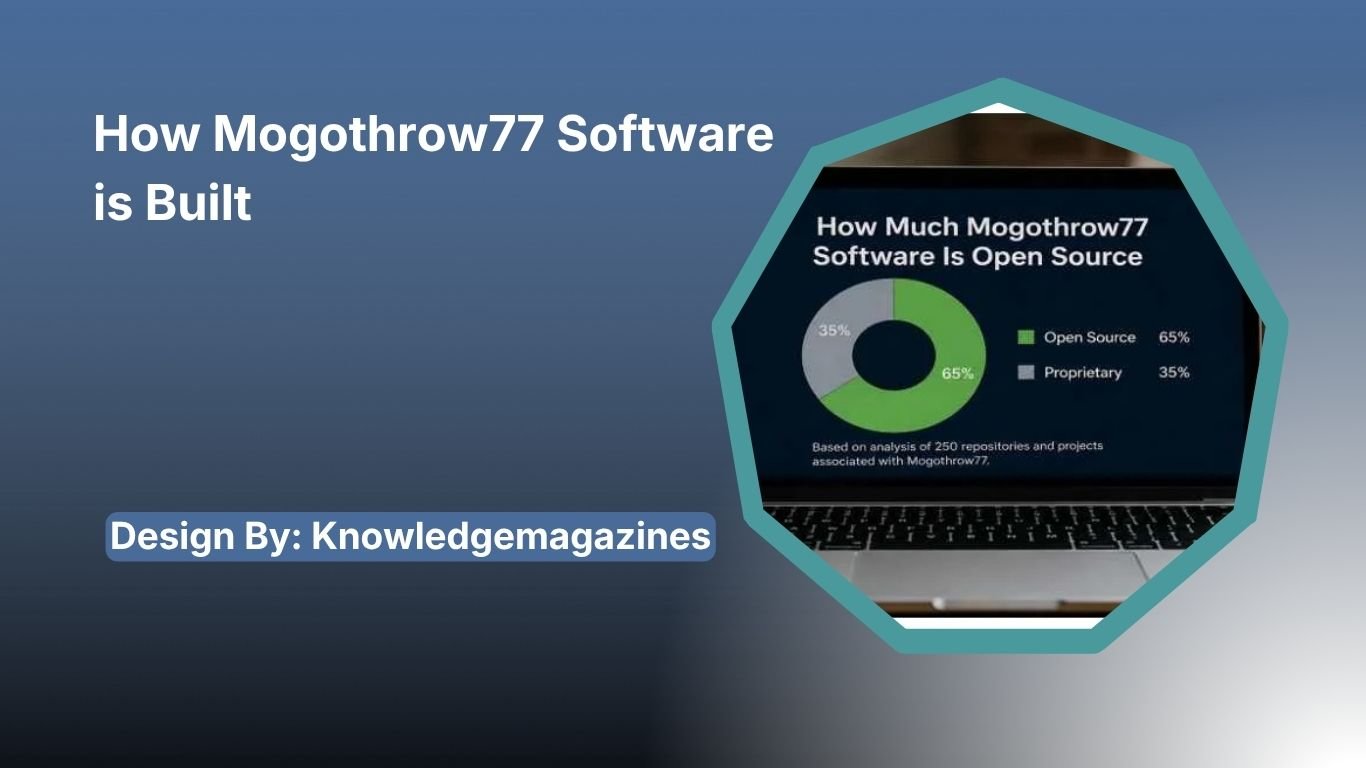
Another recurring topic is whether Mogothrow77 software follows an open-source development model. Open-source software allows developers to review, contribute to, and improve publicly available source code where the project license permits. Depending on a project’s licensing and governance, the level of openness can vary.
Potential benefits of open-source collaboration include:
- Faster bug fixes
- Community contributions
- Transparent development
- Peer-reviewed code
- Better documentation
- Continuous innovation
For developers, open-source ecosystems also provide learning opportunities by exposing real-world software engineering practices.
Continuous Integration and DevOps
Modern software development is no longer limited to writing code. Successful software teams rely on DevOps and Continuous Integration/Continuous Deployment (CI/CD) practices to deliver updates efficiently.
A typical development workflow includes:
- Developers write new code.
- Changes are stored in version control.
- Automated tests run.
- Code quality checks are performed.
- Approved code is merged.
- The application is deployed to a testing environment.
- Final deployment occurs after validation.
This process helps reduce bugs, improve software quality, and deliver new features more reliably.
Why This Architecture Matters?
The combination of modular software architecture, frontend technologies, backend infrastructure, APIs, database management, microservices, cloud-ready design, and DevOps creates software that is easier to maintain, more secure, and capable of handling future growth.
These engineering principles are widely used in modern software development because they improve performance, support collaboration among development teams, and make applications more adaptable as user requirements evolve.
Cloud Infrastructure
Cloud infrastructure is a critical part of how modern software platforms are built. Instead of relying on a single physical server, cloud-based systems distribute workloads across multiple servers to improve reliability, scalability, and availability.
For software like Mogothrow77, cloud computing enables users to access the platform from virtually anywhere while ensuring business continuity and efficient resource management.
Benefits of Cloud Infrastructure
- High availability
- Automatic resource scaling
- Faster deployments
- Centralized data management
- Improved disaster recovery
- Reduced hardware costs
- Remote accessibility
- Simplified maintenance
Cloud-native architecture also supports continuous updates without requiring lengthy system downtime.
Security Features
Security is one of the most important considerations in modern software development. Every application that stores user data should follow secure development practices to reduce risks and protect sensitive information.
Typical security measures include:
Authentication
Authentication verifies user identity before granting access. Common methods include strong passwords and multi-factor authentication (MFA).
Authorization
Role-based access control (RBAC) ensures users can only access the features and information required for their responsibilities.
Data Encryption
Encryption protects data both during transmission and while stored, reducing the risk of unauthorized access.
API Security
Secure APIs use authentication tokens, request validation, and encrypted communication to protect integrations between software components.
Activity Logging
Comprehensive audit logs help administrators monitor user activity, investigate issues, and support compliance requirements.
Performance Optimization
Fast software creates a better user experience and supports business productivity. Developers optimize performance throughout the software development lifecycle rather than treating it as an afterthought.
Common optimization techniques include:
- Efficient database queries
- Caching frequently accessed data
- Load balancing
- Optimized API responses
- Content compression
- Asynchronous processing
- Background task scheduling
- Code optimization
Regular performance testing helps identify bottlenecks before they affect users.
Scalability
One reason organizations choose modern software architecture is scalability. As the number of users, transactions, and data increases, the software should continue to perform reliably.
Scalable systems can support:
- More users
- Larger databases
- Higher traffic volumes
- Additional integrations
- New business modules
- Geographic expansion
Microservices architecture, cloud infrastructure, and modular design make it easier to scale individual components instead of rebuilding the entire application.
Mogothrow77 Software Installation Overview
Many users searching for Mogothrow77 software installation want to understand the general setup process. Exact installation steps depend on the official distribution and documentation, but enterprise software commonly follows this workflow:
Step 1: Verify System Requirements
Confirm that your operating system, hardware, and network environment meet the software’s requirements.
Step 2: Download the Software
Obtain the installer or deployment package from an official source to reduce security risks.
Step 3: Configure the Environment
Set up databases, user permissions, environment variables, and required dependencies.
Step 4: Install Components
Deploy the application, configure services, and connect required integrations.
Step 5: Test the Installation
Verify user authentication, API connections, database access, and application functionality before production use.
Advantages of Modern Software Architecture
Organizations benefit from modern software engineering practices in several ways.
- Improved Maintainability: Modular code is easier to update and troubleshoot than large monolithic systems.
- Better Performance: Optimized software responds more quickly and handles greater workloads.
- Higher Reliability: Independent services reduce the impact of failures, improving overall system stability.
- Faster Development: Development teams can work on different services simultaneously, accelerating feature releases.
- Easier Integration: Well-designed APIs allow software to connect with third-party tools and business systems.
Potential Challenges
Although modern architecture offers significant advantages, implementation also presents challenges.
Businesses should consider:
- Initial setup complexity
- Developer learning curve
- Infrastructure costs
- Monitoring multiple services
- API management
- Version compatibility
- Security maintenance
- Ongoing updates
Careful planning and documentation help reduce these challenges.
Real-World Development Workflow
Professional software engineering follows a structured lifecycle that ensures quality and reliability.
A simplified workflow includes:
- Planning: Developers define project goals, functional requirements, technical specifications, and architecture.
- Design: Engineers create system diagrams, database models, API specifications, and user interface designs.
- Development: Frontend and backend teams implement application features using version control systems and coding standards.
- Testing: Quality assurance teams perform unit testing, integration testing, performance testing, and security assessments.
- Deployment: After successful testing, the software is deployed to staging and production environments using CI/CD pipelines.
- Maintenance: Developers monitor performance, fix bugs, improve features, and release updates based on user feedback.
Future Trends in Software Development
Software engineering continues to evolve rapidly. Future versions of modern platforms are likely to incorporate:
- Artificial intelligence (AI) for automation and intelligent recommendations
- Machine learning for predictive analytics
- Serverless computing to simplify infrastructure management
- Edge computing for lower latency
- Stronger cybersecurity protections
- Low-code and no-code development tools
- Greater use of containerization technologies
- Enhanced API ecosystems and cloud-native services
Adopting these trends can help organizations build applications that remain scalable, secure, and adaptable.
Best Practices for Building Modern Software
Whether developing a new platform or maintaining an existing one, the following practices improve long-term success:
- Design a modular software architecture.
- Write clean, maintainable code.
- Use version control for collaboration.
- Automate testing and deployment.
- Prioritize security from the beginning.
- Monitor application performance continuously.
- Optimize databases and APIs regularly.
- Document code and system architecture thoroughly.
- Plan for scalability before rapid growth.
- Gather user feedback to guide future improvements.
Following these practices reduces technical debt and creates software that is easier to maintain and expand.
FAQs:
1. What technologies are used to build Mogothrow77 software?
Mogothrow77 software is built using modern technologies such as frontend frameworks, backend services, databases, APIs, cloud infrastructure, and microservices. Combined with DevOps and continuous integration, these technologies create a scalable, secure, and high-performance software platform suitable for modern applications.
2. Why is microservices architecture important in Mogothrow77 software?
Microservices architecture divides the software into independent services that communicate through APIs. This approach improves scalability, simplifies maintenance, accelerates feature development, enhances fault isolation, and allows development teams to update individual components without affecting the entire application or disrupting users.
3. Does Mogothrow77 software support cloud-based deployment?
Yes. Mogothrow77 software is designed around cloud-ready architecture, enabling flexible deployment, automatic scaling, centralized data management, improved reliability, and remote accessibility. Cloud infrastructure also supports continuous updates, disaster recovery, and better performance for businesses and development teams.
4. How does DevOps improve the Mogothrow77 software development process?
DevOps integrates software development with IT operations through automation, continuous integration, testing, and deployment. This approach shortens release cycles, improves software quality, reduces deployment errors, enhances collaboration among developers, and ensures reliable delivery of new features and security updates.
5. What are the main advantages of Mogothrow77 software architecture?
Its modular architecture offers scalability, performance optimization, API integration, secure data management, easier maintenance, and seamless collaboration. These benefits help organizations reduce technical complexity, support future growth, improve operational efficiency, and deliver a better user experience across modern digital environments.
Conclusion
Understanding how Mogothrow77 software is built highlights the importance of modern software engineering, including modular architecture, frontend and backend development, APIs, databases, cloud infrastructure, and DevOps practices. These technologies work together to create secure, scalable, and high-performance applications capable of supporting future growth. By following industry best practices such as continuous integration, performance optimization, and secure coding, developers can build reliable software solutions that meet evolving business requirements while delivering an excellent user experience.
Related Post:
- What Is 493xds5.0 In Software – Guide to Software Build IDs!
- Python Software Issue 0297xud8 – Troubleshooting Guide & Solutions!
- Why Immorpos35.3 Software Implementations Fail – Full Guide!
 mainmyhostinger@gmail.com
  EchoLinkers
[…] guide explains everything you need to know, including how Rational Software Architect works, its architecture, major features, benefits, use cases, and why many enterprise […]
[…] that treat curriculum mapping as an ongoing administrative habit, supported by software, consistently report smoother accreditation cycles than those that treat it as an annual compliance […]
[…] How Mogothrow77 Software is Built – Development Process! […]