
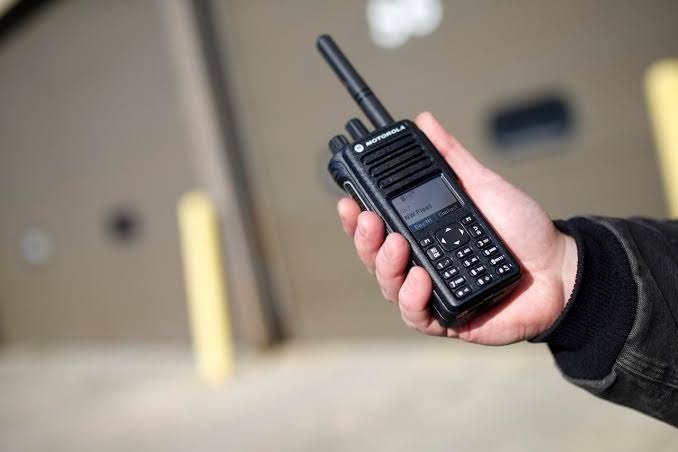
Handheld radios remain an important communication tool for businesses, field teams, and professionals who need fast and dependable contact throughout the workday. Unlike smartphones, two-way radios are designed specifically for immediate communication, often allowing users to connect with a group without dialing individual numbers. This makes them useful in construction, security, hospitality, transportation, manufacturing, events, and many other industries.
Choosing the right device requires more than looking at price or advertised range. Buyers should consider frequency, battery life, channel capacity, durability, audio quality, operating environment, and available accessories. A compact model such as a RadioRed can be an attractive option for users who value portability, straightforward controls, and practical communication features.
Start With Your Communication Needs
The best radio is the one that matches the environment in which it will be used.
Before purchasing equipment, consider who will use the radios, how frequently they will communicate, and where they will be working. A small retail store may need only a few simple radios, while a large construction project may require a more robust communication system involving multiple teams.
Ask yourself several basic questions:
- How many people need radios?
- Will users communicate individually or in groups?
- Will the radios be used indoors or outdoors?
- How long will each shift last?
- Are there buildings or other obstacles between users?
- Will the equipment be exposed to dust or moisture?
- Is hands-free operation necessary?
- Will additional accessories be required?
Answering these questions can help narrow down the available options before comparing specific models.
Understand Radio Frequency
Frequency is one of the most important technical considerations when selecting a two-way radio.
Different radios operate within different frequency ranges, and the appropriate choice depends on the intended application, operating environment, and applicable regulations.
VHF and UHF radios are two common categories used for professional communication.
VHF, or Very High Frequency, generally performs well in open outdoor environments. It can be useful for agriculture, transportation, outdoor events, and operations where users are spread across relatively open areas.
UHF, or Ultra High Frequency, is often advantageous in urban and indoor environments. Its characteristics can make it useful for buildings, warehouses, hotels, shopping centers, and other locations with walls and structures that can interfere with radio signals.
Neither category is universally better. The right choice depends on the environment and the communication requirements.
For buyers in Mexico, it is also important to ensure that the equipment and frequency use comply with applicable local telecommunications requirements.
Consider the Actual Communication Range
Range is often one of the first specifications buyers notice, but advertised range should be interpreted carefully.
The actual communication distance can change depending on terrain, buildings, antenna design, frequency, radio power, interference, and the location of users.
Two radios operating in an open area may communicate over a greater distance than the same devices used inside a reinforced concrete building.
Hills, mountains, metal structures, and dense urban environments can also affect performance.
This means a radio advertised for a particular maximum range should not automatically be expected to deliver that distance in every situation.
For professional applications, it is better to evaluate the environment where the radios will actually be used. If coverage is insufficient, a more advanced communication system may be necessary.
When Should You Consider a Repeater?
A repeater can extend the useful coverage of a radio communication system.
Instead of relying only on direct communication between two handheld radios, a repeater receives a transmission and retransmits it from a strategically positioned location.
This can be particularly useful for large facilities, industrial sites, hotels, security operations, transportation companies, and organizations that need reliable communication across a wide area.
The effectiveness of a repeater depends heavily on its location. A properly positioned system can provide better coverage than simply increasing the number of handheld radios.
If employees regularly report dead zones or communication problems, it may be worth evaluating whether a repeater-based system would solve the underlying issue.
Look at Battery Life
Battery performance is critical for professional radio users.
A radio that loses power halfway through a shift can create communication problems at exactly the wrong time. For this reason, battery capacity and expected operating time should be considered before purchasing.
Think about the length of a typical work shift. Someone working four hours outdoors may have different requirements from a security employee working a twelve-hour shift.
Also consider how the radios will be charged.
A business with many employees may benefit from charging stations that can handle multiple batteries or devices simultaneously. Spare batteries can also be useful for teams that operate continuously.
When comparing battery specifications, remember that actual runtime depends on usage. A radio that is transmitting frequently will generally consume more power than one used only occasionally.
Check Durability
Professional radios are often exposed to conditions that would be unsuitable for ordinary consumer electronics.
Construction workers may carry radios around dust and debris. Warehouse employees may drop equipment accidentally. Outdoor workers can encounter rain, mud, heat, or cold.
For these applications, durability should be treated as a basic requirement rather than an optional feature.
Look for information about impact resistance, water protection, dust resistance, and relevant testing standards.
Some professional radios are designed and tested according to military or industrial durability standards. While certification does not guarantee that a device will survive every possible accident, it can provide useful information about the conditions the equipment was designed to withstand.
A rugged radio may have a higher initial price, but replacing inexpensive equipment repeatedly can ultimately cost more.
Understand IP Ratings
An IP rating can help buyers understand how well electronic equipment is protected against solids and liquids.
The letters “IP” are followed by two numbers. The first relates primarily to protection against solid particles, while the second relates to protection against water.
For example, an IP54-rated device provides a certain level of protection against dust and water splashes.
This does not mean that the device can be submerged or exposed indefinitely to harsh weather.
When choosing a radio, consider the actual conditions of the workplace. If employees occasionally work in light rain, a certain level of water resistance may be sufficient. If equipment is regularly exposed to heavy moisture, more substantial protection may be appropriate.
Always review the manufacturer’s specifications rather than assuming that any “water-resistant” radio can handle the same conditions.
Evaluate Audio Quality
Clear communication is more important than simply having a strong signal.
A radio may connect successfully but still be difficult to use if voices are distorted or background noise makes conversations hard to understand.
Audio performance becomes particularly important in noisy environments such as construction sites, factories, airports, warehouses, and outdoor events.
Look for features designed to improve speech clarity or reduce background noise where appropriate.
The speaker and microphone design can also affect usability. A radio with clear audio at a comfortable volume can reduce the need for users to repeat messages.
For teams working in particularly loud environments, specialized audio accessories may provide additional benefits.
Think About Hands-Free Communication
Hands-free operation can be useful when workers need both hands available.
A construction worker, technician, warehouse employee, or security professional may not always be able to hold a radio while working.
Voice-activated features such as VOX can allow the radio to transmit when the user speaks, depending on the device configuration and operating conditions.
However, hands-free communication is not ideal for every situation.
In noisy environments, automatic voice activation may respond to surrounding sounds. For some professional applications, a push-to-talk button combined with a headset may provide better control.
The important thing is to select the communication method that matches the job rather than assuming that more features automatically mean better performance.
Consider Channel Capacity
Channel capacity determines how many communication channels can be configured on a radio.
A small team with a single purpose may need only a few channels. Larger organizations may want different channels for separate departments, locations, or activities.
For example, a hotel could organize communication between housekeeping, maintenance, security, and management. An event company could use different channels for production, security, logistics, and technical teams.
Having multiple channels can make communication more organized and reduce unnecessary interruptions.
However, the radio should also be easy to operate. If employees struggle to identify the correct channel, having numerous options may create confusion instead of improving communication.
Look at Scanning Features
Scanning can be useful when users need to monitor multiple channels.
Instead of manually switching between channels, a scanning function can monitor programmed channels and identify activity according to the device’s configuration.
This may be particularly useful for supervisors or employees responsible for several teams.
For example, a security manager may need to monitor different areas of a property. A site supervisor may want to keep track of multiple work groups.
The usefulness of scanning depends on how the radio system is programmed, so businesses should consider their communication structure before deciding whether this feature is necessary.
Think About DTMF and Other Advanced Features
Some professional radios include additional communication functions such as DTMF, scanning, programmable channels, monitoring modes, and other specialized controls.
DTMF, or Dual-Tone Multi-Frequency, is a signaling method that uses combinations of tones to communicate specific commands or information through compatible radio systems.
Not every user needs this functionality, but it can be valuable in certain professional communication setups.
The important point is to distinguish between useful features and unnecessary complexity.
A business should choose features that solve actual communication problems. Purchasing a device with numerous advanced functions does not automatically make the communication system more effective.
Choose the Right Accessories
A radio is only one part of a professional communication setup.
Accessories can improve convenience, protection, and usability.
Common accessories include:
- Spare batteries
- Desktop chargers
- Multi-unit charging stations
- Belt clips
- Carrying cases
- Speaker microphones
- Earpieces
- Headsets
- Remote microphones
- Replacement antennas
The right combination depends on the user’s job.
A security guard may benefit from a discreet earpiece. A construction worker may prefer a speaker microphone that can be attached to clothing. A fleet operator may need additional charging equipment for multiple vehicles or employees.
When purchasing radios for an organization, it is often more efficient to plan the accessories at the same time rather than buying them individually later.
Consider Mobile and Fixed Radios Too
Handheld radios are convenient because users can carry them throughout a facility or worksite.
However, they are not the only option.
Mobile radios can be installed in vehicles and are useful for transportation, logistics, emergency response, agriculture, and other applications where communication takes place from cars, trucks, boats, or specialized vehicles.
Fixed or base radios can also serve as communication points within an organization.
In larger operations, a combination of handheld, mobile, and base equipment may provide better coverage and flexibility than relying on one type of radio.
The best system is determined by how people actually move and work.
Marine and Aviation Applications Need Special Consideration
Marine and aviation communication have specific requirements and should not be treated like ordinary commercial radio use.
Marine radios may need to operate in environments where equipment is exposed to water, humidity, salt, and constant outdoor use. Features such as water resistance and emergency communication capabilities can therefore be especially important.
Aviation communication is also highly specialized. Equipment, frequencies, procedures, and regulatory requirements can differ significantly from those used in general business communications.
Anyone purchasing radios for marine or aviation applications should verify that the equipment is specifically designed and approved for the intended use.
Using an ordinary handheld radio where specialized equipment is required can create safety and compliance problems.
Consider Intrinsically Safe Radios
Some workplaces contain potentially hazardous environments where ordinary electronic equipment may present additional risks.
Industries involving flammable gases, vapors, combustible dust, or other hazardous materials may require intrinsically safe communication equipment.
Intrinsically safe radios are designed and certified to reduce the risk of electrical or thermal energy creating an ignition source under specified hazardous conditions.
These devices are particularly relevant to industries such as oil and gas, chemical processing, mining, and certain industrial operations.
If your workplace involves hazardous materials, do not select equipment based only on durability or water resistance. Consult the relevant safety requirements and determine what certifications are required for the environment.
Compare Brands and Professional Support
Brand reputation can matter when purchasing communication equipment for business use.
Established manufacturers often have extensive experience developing radios for different industries and applications. Brands such as Motorola, Kenwood, and ICOM have product lines designed for professional communication needs.
However, choosing a well-known brand is only one part of the decision.
Buyers should also consider product availability, replacement batteries, accessories, technical support, warranty terms, programming services, and long-term maintenance.
A radio system can remain in service for years, so support after the initial purchase can be just as important as the original product specifications.
For Mexican businesses, working with a local supplier can also make it easier to obtain compatible accessories, receive product guidance, and manage future equipment needs.
Think About Regulatory Requirements
Radio communication operates within a regulated spectrum.
Before deploying professional radios, organizations should make sure their equipment and frequency use comply with the applicable regulations in Mexico.
Requirements can vary according to frequency, power, application, and type of service. Certain frequencies may require authorization, while other devices or services may operate under specific conditions.
Businesses should not assume that any radio can legally be programmed to any frequency simply because the device technically supports it.
Consulting an experienced radio communications supplier or qualified regulatory professional can help ensure that a system is configured appropriately.
Plan for Future Expansion
A communication system should ideally meet today’s needs while leaving room for future growth.
If a business expects to add employees, vehicles, locations, or departments, consider whether the selected radio system can expand accordingly.
For example, a small team may start with five radios but eventually require twenty or more. Choosing equipment that can be integrated into a larger communication system can reduce the need for a complete replacement later.
Think about future accessories, additional channels, repeaters, mobile units, and programming requirements.
A little planning at the beginning can save time and money as the organization grows.
Where to Buy Professional Radios
Selecting the right supplier can be just as important as selecting the right model.
A specialist can help compare frequency options, accessories, batteries, antennas, repeaters, and other equipment based on the intended application.
For Mexican customers, an established local supplier can also provide information about available models and help ensure that the equipment matches local requirements.
For example, RadioRed offers communication equipment and accessories from established manufacturers, including product categories covering portable, mobile, marine, aviation, and specialized radio applications.
When comparing suppliers, look for clear product specifications, professional assistance, reliable after-sales support, and access to replacement accessories.
Final Thoughts
Choosing a professional handheld radio requires a practical evaluation of how and where the equipment will be used.
Start with the communication environment, then consider frequency, range, battery life, durability, water and dust protection, audio quality, channels, hands-free functions, and accessories. For larger operations, also evaluate repeaters, mobile radios, base stations, and future expansion.
Different industries have different requirements. A simple portable radio may be ideal for a small business, while a construction company, security organization, transportation fleet, or industrial facility may need a complete communication system.
It is also important to consider regulatory requirements and select equipment designed for the intended environment. Specialized applications such as marine, aviation, and hazardous industrial operations require additional attention to certification and safety.
The most expensive radio is not necessarily the best choice, and the cheapest model may not provide the reliability a professional team needs. The right solution is the one that balances performance, durability, usability, support, and cost.
By clearly defining your communication requirements before purchasing, you can choose equipment that helps employees stay connected, coordinate tasks more efficiently, and maintain reliable communication throughout the working day.
Related Post:
- Curriculum Management Software Medical Schools United States
- Why Do Companies Use Online Collaborative Productivity Software
- What is Rational Software Architect – Complete Guide!
 info.knowledgemagazine@gmail.com