
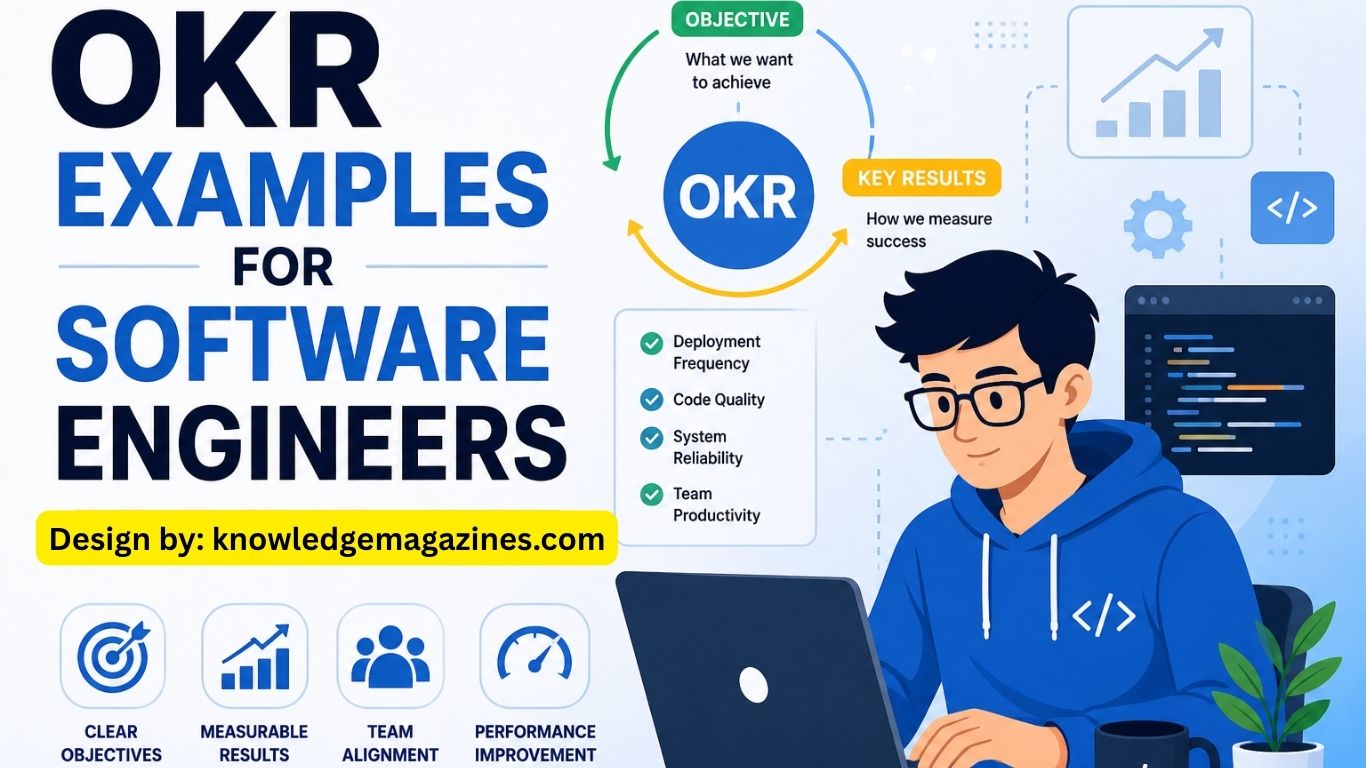
OKR examples for software engineers help teams set measurable goals, improve productivity, track performance metrics like deployment frequency and code quality, and align development efforts with business objectives for better results.
In modern software development, setting clear and measurable goals is essential for success. This is where OKR examples for software engineers become powerful.
OKRs (Objectives and Key Results) help engineering teams align with business goals, improve engineering productivity, and track measurable progress using real metrics like deployment frequency, code quality, and system reliability.
In this guide, you’ll learn:
- What are OKRs for software engineers
- How to write effective engineering OKRs
- Real-world OKR examples (with metrics)
- Best practices to improve performance
What Are OKRs for Software Engineers?
OKRs (Objectives and Key Results) are a goal-setting framework used to define and track outcomes.
- Objective → What you want to achieve
- Key Results → How you measure success
Unlike traditional KPIs, OKRs focus on growth, alignment, and measurable outcomes.
Example:
Objective: Improve system reliability
Key Results:
- Reduce downtime from 5% to 1%
- Improve uptime to 99.9%
- Decrease mean time to recovery (MTTR) from 60 minutes to 20 minutes
This structure helps engineering teams focus on performance tracking and measurable goals for developers.
Why Are OKRs Important in Engineering?
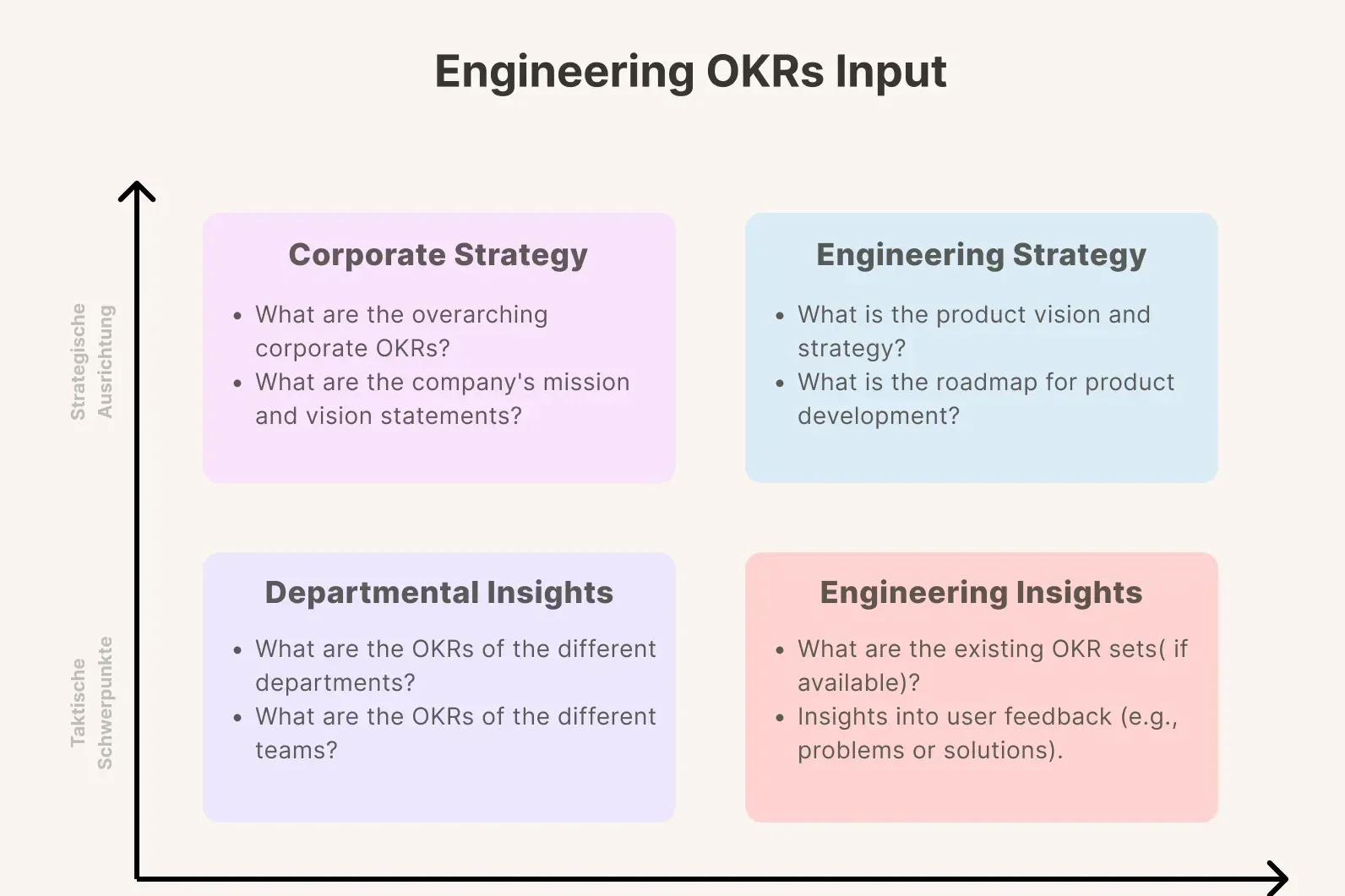
Using engineering OKRs provides several benefits:
🚀 1. Improves Engineering Productivity
Teams can focus on high-impact work instead of random tasks.
⚙️ 2. Aligns Development with Business Goals
OKRs ensure that software development OKRs directly support company objectives.
📊 3. Tracks Real Metrics
You can measure success using:
- Deployment frequency
- Lead time for changes
- Change failure rate
- Code quality metrics
🤝 4. Enhances Team Collaboration
Clear development team goals improve communication and accountability.
How to Write OKRs for Software Engineers (Step-by-Step)?
To create effective developer OKRs, follow this proven process:
1. Define a Clear Objective
Make it:
- Ambitious
- Clear
- Outcome-focused
2. Add Measurable Key Results
Each result must be:
- Quantifiable
- Time-bound
- Relevant
3. Use Engineering Metrics
Incorporate NLP-based metrics like:
- CI/CD pipeline performance
- Unit test coverage
- Bug tracking reduction
4. Align with Agile Goals
Integrate OKRs with:
- Sprint goals
- Agile goal setting
- DevOps practices
Best OKR Examples for Software Engineers
Now let’s explore real-world OKR examples for developers with advanced metrics.
1. Performance & Productivity OKRs
Objective: Improve engineering productivity and delivery speed
Key Results:
- Increase deployment frequency from 2/week to 10/week
- Reduce lead time for changes from 3 days to 12 hours
- Automate 70% of manual testing using automation testing tools
- Improve sprint velocity by 30%
👉 These OKRs focus on workflow improvement and efficiency
2. Code Quality & Reliability OKRs
Objective: Improve code quality and system reliability
Key Results:
- Increase unit test coverage from 60% to 90%
- Reduce production bugs by 40% using bug tracking systems
- Decrease change failure rate from 25% to 10%
- Achieve 99.95% uptime
👉 Focuses on software team performance and reliability
3. Technical Debt Reduction OKRs
Objective: Reduce technical debt and improve maintainability
Key Results:
- Refactor 5 legacy modules using code refactoring techniques
- Reduce system complexity by 30%
- Improve API performance response time by 40%
- Migrate monolith to microservices architecture
👉 Critical for long-term scalability
4. DevOps & Automation OKRs
Objective: Enhance DevOps practices and automation
Key Results:
- Implement full CI/CD pipeline automation
- Reduce deployment errors by 50%
- Decrease release cycle time from weekly to daily
- Improve rollback success rate to 99%
👉 Boosts efficiency and reduces manual work
5. Security & Compliance OKRs
Objective: Improve system security and risk management
Key Results:
- Fix 100% of high-priority vulnerabilities
- Implement automated security checks in CI/CD
- Reduce security incidents by 70%
6. Team Growth & Collaboration OKRs
Objective: Improve team collaboration and developer growth
Key Results:
- Conduct weekly peer code reviews
- Reduce onboarding time by 40%
- Train engineers on version control (Git) and DevOps tools
- Increase knowledge-sharing sessions
7. Product Improvement OKRs
Objective: Improve product performance and user experience
Key Results:
- Improve page load time by 50%
- Increase customer satisfaction score by 25%
- Reduce churn rate by 15%
- Optimize database using database optimization techniques
OKR Examples by Role
OKRs for Junior Developers
- Learn version control (Git)
- Increase code review participation
- Improve debugging skills
OKRs for Senior Software Engineers
- Lead system architecture improvements
- Reduce technical debt
- Improve scalability
Engineering Manager OKRs
- Improve team productivity by 30%
- Align engineering goals with business strategy
- Reduce delivery delays
DevOps Engineer OKRs
- Optimize CI/CD pipeline
- Reduce downtime
- Improve system monitoring
OKR vs KPI in Software Development
Understanding KPI vs OKR is essential:
| KPI | OKR |
| Measures performance | Drives growth |
| Fixed targets | Flexible goals |
| Example: uptime | Example: improve uptime |
👉 Use KPIs for tracking and OKRs for improvement.
Best Practices for Writing Engineering OKRs
To outperform competitors, follow these strategies:
Keep Objectives Clear
Avoid vague goals like “improve system.”
Focus on Measurable Results
Use:
- Code quality metrics
- Deployment frequency
- MTTR
Limit OKRs
3–5 objectives per quarter are ideal.
Align with Business Goals
Engineering OKRs should support company strategy.
Review Weekly
Track progress regularly for better execution.
FAQs:
1. What are OKRs in software engineering?
OKRs in software engineering are a goal-setting framework that defines clear objectives and measurable key results. They help developers track performance, improve productivity, and align technical work with business goals using metrics like deployment frequency, uptime, and code quality.
2. How do OKRs improve engineering productivity?
OKRs improve engineering productivity by focusing teams on high-impact tasks, reducing unnecessary work, and tracking measurable outcomes. Using metrics like lead time, automation, and sprint velocity, teams can continuously optimize workflows and deliver faster, more reliable software.
3. What is the difference between OKRs and KPIs?
OKRs focus on achieving ambitious goals with measurable results, while KPIs track ongoing performance. In software development, KPIs measure stability like uptime, whereas OKRs aim to improve outcomes such as increasing system reliability or reducing technical debt.
4. What are good OKR examples for software engineers?
Good OKR examples include improving code quality, increasing deployment frequency, reducing bugs, and enhancing system reliability. For example, increasing test coverage to 90% or reducing MTTR ensures measurable progress and better engineering performance.
5. How often should engineering OKRs be reviewed?
Engineering OKRs should be reviewed weekly or bi-weekly to track progress and make adjustments. Regular reviews ensure alignment with goals, improve accountability, and help teams quickly identify issues in performance, delivery speed, or system reliability.
Conclusion:
OKR examples for software engineers provide a powerful framework for setting clear goals and measuring success. By focusing on measurable key results like deployment frequency, code quality, and system reliability, teams can improve productivity and alignment with business objectives. Implementing well-structured OKRs helps engineers prioritize impactful work, reduce technical debt, and enhance collaboration. When used effectively, OKRs drive continuous improvement, enabling software teams to deliver high-quality products faster and more efficiently in a competitive development environment.
 mainmyhostinger@gmail.com
  EchoLinkers
[…] In today’s competitive digital world, businesses are searching for smarter ways to automate marketing, improve productivity, and increase conversion rates. This is exactly why GenBoostermark software is so popular. […]
[…] Testing is one of the most overlooked stages of software implementation. […]