
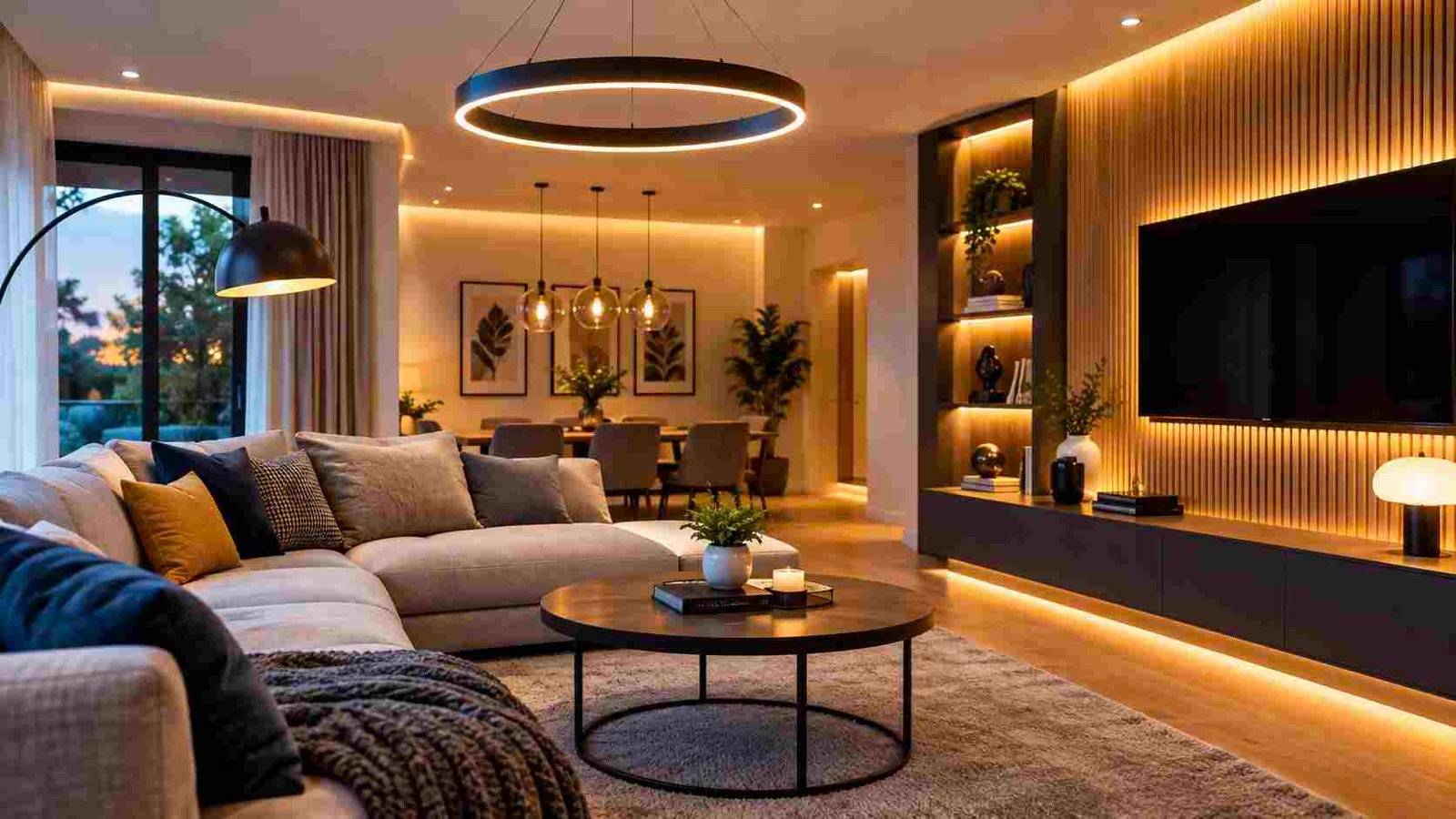
Residential lighting design combines ambient, task, and accent lighting to shape how a space looks and feels. The right fixtures, color temperatures, and smart systems can turn an ordinary room into something remarkable—without a full renovation.
Lighting does more than illuminate a room. It sets the mood, defines the space, and can make even a modest home feel polished and intentional. Yet it’s one of the most overlooked elements of interior design. Most people choose fixtures last, as an afterthought—when really, thoughtful residential lighting design should be part of the plan from the start.
How does lighting affect the mood and ambiance of a room?
The shift from purely functional lighting to design-driven solutions has changed how we think about our homes. Overhead lighting alone creates a flat, uninviting atmosphere. Layer in some warmth and dimension, though, and the same room feels completely different. That’s the real power of residential lighting design—it’s less about brightness and more about intention.
What are the best contemporary residential lighting ideas for modern homes?
Layered lighting is the foundation of any good lighting plan. Ambient lighting provides general illumination, task lighting handles specific activities like reading or cooking, and accent lighting draws attention to architectural details or artwork. Used together, they create depth and flexibility.
Statement fixtures are having a moment. A sculptural pendant over a dining table or an oversized floor lamp in a living room corner does double duty—it lights the space and anchors the aesthetic. Think of it as functional art.
Smart lighting systems offer convenience and efficiency. Adjust brightness, color temperature, and scheduling from your phone or voice assistant. Beyond the tech appeal, smart systems help reduce energy consumption—a practical win alongside the style points.
Minimalist and industrial styles dominate contemporary interiors. Exposed bulbs, matte black finishes, and clean geometric forms work well in open-plan spaces and complement both modern and transitional design schemes.
Maximizing natural light is just as important as choosing the right fixtures. Mirrors, light-colored walls, and sheer window treatments amplify daylight and reduce reliance on artificial sources during the day.
How should residential lighting design vary from room to room?
Each room has different needs, and your lighting should reflect that.
- Living rooms benefit from multiple sources at varying heights—a mix of floor lamps, table lamps, and ceiling fixtures creates a warm, layered effect.
- Kitchens need strong task lighting over work surfaces, ideally under-cabinet LEDs, balanced with ambient lighting that doesn’t feel clinical.
- Bedrooms call for soft, adjustable lighting. Dimmable bedside lamps or wall sconces let you wind down without harsh overhead glare.
- Home offices require bright, focused light to reduce eye strain. Position desk lighting to minimize shadows and consider a daylight-balanced bulb to stay alert during long work sessions.
How do you choose the right lighting fixtures for your interior style?
Color temperature matters more than most people realize. Warm white (2700K–3000K) suits living spaces and bedrooms, while cool white (4000K–5000K) works better in kitchens and offices. Getting this wrong can make even beautiful fixtures feel off.
Mixing traditional and modern elements is a legitimate design strategy—a classic brass chandelier in a contemporary space creates visual contrast that feels deliberate rather than dated. And budget-friendly options have never been better. Retailers like IKEA, Wayfair, and CB2 offer well-designed fixtures at accessible price points, so strong residential lighting design doesn’t require a designer budget.
Light It Right
Good lighting is one of the most impactful upgrades you can make to a home. It costs less than a renovation, takes less time than a repaint, and delivers results you’ll notice every single day. Start by assessing each room—identify what’s working, what feels flat, and where a small change could make a big difference.
Frequently Asked Questions
What is the most important aspect of residential lighting design?
Layering. Combining ambient, task, and accent lighting gives you control over mood and function in any room.
What color temperature is best for home lighting?
Warm white (2700K–3000K) suits most living spaces. Use cooler temperatures (4000K+) in kitchens and home offices where focus matters.
Are smart lighting systems worth it?
For most homeowners, yes. Smart lighting systems offer energy savings, convenience, and flexibility that traditional switches can’t match.
Can good lighting design work on a tight budget?
Absolutely. Strategic placement, the right bulb temperatures, and affordable statement fixtures can dramatically improve a space without high costs.
 blitz
blitz