
The Winobit3.4 software error occurs due to corrupted files, missing DLLs, outdated drivers, compatibility issues, or antivirus conflicts. Reinstalling the software, updating Windows, and checking dependencies usually resolve it.
The Winobit3.4 software error is a frustrating issue that can prevent users from launching the application, completing installations, or running essential program functions. Many users report that Winobit3.4 crashes unexpectedly, freezes during startup, displays warning messages, or refuses to open altogether.
If you are searching for how to fix Winobit3.4 software error, what is Winobit3.4 software error, or why does Winobit3.4 keep crashing, you’re not alone. This problem is often caused by corrupted installation files, missing DLL files, outdated drivers, software compatibility issues, antivirus interference, or system conflicts.
In this comprehensive guide, you’ll learn what the Winobit3.4 software error is, the most common causes behind it, proven troubleshooting methods, advanced diagnostic techniques, and practical steps to prevent future software failures.
What Is Winobit3.4 Software Error?
The Winobit3.4 software error is a general application failure that occurs when the software cannot execute correctly within the operating system environment.
The error may appear in several forms:
- Application crashes during startup
- Program freezing or becoming unresponsive
- Installation failures
- Missing DLL file warnings
- Compatibility errors
- Runtime exceptions
- Launch failure messages
Although there is limited official documentation regarding Winobit3.4 itself, reports across forums and troubleshooting websites suggest that the issue is usually linked to software installation problems, dependency failures, operating system conflicts, or corrupted program files. Understanding the root cause is the first step toward successful software troubleshooting.
Common Symptoms of Winobit3.4 Software Error
Before attempting repairs, it’s important to identify the symptoms.
Common signs include:
- Application refuses to launch
- Unexpected software crashes
- Black screen during startup
- Error popups when opening the program
- Slow performance before crashing
- Failed software updates
- Missing dependency notifications
- Installation setup errors
- System freezing while running the software
These symptoms often indicate deeper problems within the software environment.
What Causes Winobit3.4 Software Error?
Several factors can trigger the error. Understanding these causes helps identify the correct solution.
1. Corrupted Installation Files
One of the most common reasons behind the Winobit3.4 software error is a damaged or incomplete installation.
Installation files may become corrupted due to:
- Interrupted downloads
- Power outages during setup
- Disk write errors
- Faulty storage devices
When critical files are missing, the application may fail to start.
2. Missing DLL Files
DLL (Dynamic Link Library) files contain code required by applications.
Missing DLL files can result from:
- Improper software removal
- Malware infections
- Accidental file deletion
- Failed updates
When a required DLL cannot be located, Winobit3.4 may display startup errors or crash immediately.
3. Outdated Device Drivers
Device drivers serve as communication bridges between hardware and software.
Outdated drivers may create:
- Software compatibility issues
- Graphics rendering failures
- Application instability
- Performance degradation
Updating drivers often resolves persistent software errors.
4. Antivirus Interference
Security software occasionally flags legitimate files as suspicious.
This may lead to:
- Blocked executables
- Quarantined DLL files
- Startup restrictions
- Failed updates
Many users discover that antivirus programs accidentally prevent Winobit3.4 from running properly.
5. Windows Compatibility Issues
Older applications sometimes struggle with newer Windows versions.
Compatibility problems may occur due to:
- Deprecated system functions
- Permission restrictions
- Framework incompatibilities
- Unsupported software environments
Running the application in compatibility mode often helps resolve these issues.
6. Registry Conflicts
The Windows registry stores configuration settings used by software applications.
Registry problems can emerge from:
- Incomplete uninstallations
- Invalid entries
- Corrupted configuration data
- Failed updates
When registry references become damaged, software execution failures become more likely.
7. Low System Resources
Applications require adequate resources to function correctly.
Insufficient resources may include:
- Low RAM
- High CPU utilization
- Storage shortages
- Background process overload
Resource shortages frequently contribute to software crashes and freezes.
How to Fix Winobit3.4 Software Error?
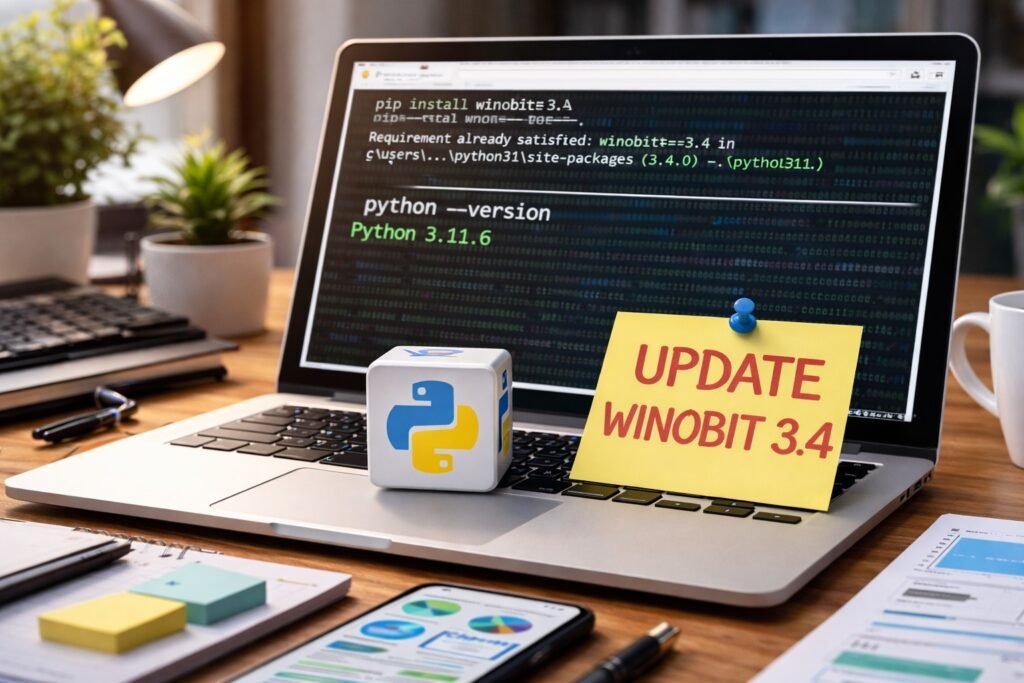
Follow these troubleshooting methods in order.
Step 1: Restart Your Computer
A simple restart clears temporary memory issues and background conflicts.
Benefits include:
- Refreshing system processes
- Releasing locked files
- Resetting temporary configurations
Many software launch failures disappear after a clean reboot.
Step 2: Run Winobit3.4 as Administrator
Permission restrictions often prevent software from accessing required system resources.
To run as administrator:
- Locate the Winobit3.4 shortcut.
- Right-click the icon.
- Select Run as Administrator.
- Confirm the security prompt.
Administrative access may resolve application launch failures immediately.
Step 3: Reinstall the Application
A clean reinstallation replaces corrupted files and missing components.
Recommended process:
- Uninstall Winobit3.4 completely.
- Delete leftover installation folders.
- Restart your system.
- Download a fresh installer.
- Reinstall the application.
This remains one of the most effective solutions.
Step 4: Update Windows
Operating system updates include bug fixes and compatibility improvements.
To update Windows:
- Open Settings.
- Select Windows Update.
- Check for updates.
- Install available patches.
- Restart your computer.
Updated systems experience fewer software compatibility issues.
Step 5: Update Device Drivers
Driver updates improve communication between software and hardware.
Focus on:
- Graphics drivers
- Chipset drivers
- Storage controllers
- Network drivers
Driver maintenance significantly improves application stability.
Step 6: Scan for Malware
Malware can damage application files and interfere with normal software operations.
Run a full system scan to detect:
- Trojans
- Spyware
- Ransomware
- Malicious scripts
Removing malware often restores normal functionality.
Step 7: Verify System Requirements
Software may fail if minimum requirements are not met.
Check:
- Operating system version
- RAM requirements
- Storage availability
- Processor compatibility
Unsupported systems frequently trigger launch failures.
Advanced Troubleshooting Techniques
Most competitors stop at basic fixes. Advanced diagnostics can identify deeper issues.
Check Windows Event Viewer
Windows Event Viewer records detailed error information.
To access:
- Press Windows + X.
- Select Event Viewer.
- Open Windows Logs.
- Review Application Logs.
Look for:
- Application Error events
- DLL failures
- Runtime exceptions
- Dependency conflicts
These logs often reveal the exact cause of software crashes.
Analyze Application Log Files
Many programs maintain internal log files.
Logs may reveal:
- Failed modules
- Missing dependencies
- Configuration conflicts
- Security restrictions
Developers and IT professionals rely heavily on log analysis for software diagnostics.
Check Dependency Packages
Applications often require external frameworks.
Examples include:
- Microsoft Visual C++ Redistributables
- .NET Framework
- DirectX Components
Missing dependencies frequently cause application launch failures.
Real-World Example of Error Resolution
Consider a user experiencing repeated Winobit3.4 startup crashes.
Initial symptoms:
- Application closes immediately after launch.
- Error message references missing DLL files.
Investigation revealed:
- Antivirus software quarantined a required DLL.
- The application could not load necessary resources.
Resolution:
- Restore quarantined file.
- Add software folder to antivirus exclusions.
- Reinstall application.
Result:
- Application launched successfully.
- No further crashes occurred.
This example demonstrates why identifying the root cause is essential.
Security Risks Associated with Winobit3.4 Errors
Users sometimes assume the error itself is malware. In most cases, the error is not malicious.
However, security risks can arise when:
- Downloading software from unofficial websites
- Installing modified installers
- Using cracked software versions
- Ignoring suspicious security warnings
Always obtain software from trusted sources.
How to Prevent Future Winobit3.4 Software Errors?

Prevention is easier than troubleshooting.
Follow these best practices:
Keep Software Updated
Regular updates provide:
- Security patches
- Bug fixes
- Stability improvements
Maintain Driver Updates
Updated drivers improve:
- Hardware compatibility
- Application performance
- System reliability
Monitor System Health
Check:
- Available storage
- RAM usage
- CPU load
- Disk integrity
Healthy systems experience fewer software failures.
Create System Restore Points
Restore points provide recovery options when software updates create problems.
Benefits include:
- Faster recovery
- Reduced downtime
- Simplified troubleshooting
Avoid Untrusted Downloads
Unofficial installers may contain:
- Malware
- Corrupted files
- Modified software components
Always verify software sources before installation.
Winobit3.4 Software Error Troubleshooting Checklist
Use this quick checklist:
- Restart the computer
- Run as administrator
- Reinstall the application
- Update Windows
- Update drivers
- Scan for malware
- Verify system requirements
- Check Event Viewer logs
- Review application logs
- Install missing dependencies
- Disable conflicting antivirus rules
- Verify registry integrity
FAQs
1. Why does Winobit3.4 keep crashing on startup?
Winobit3.4 may crash during startup because of corrupted installation files, missing DLL dependencies, outdated drivers, insufficient system resources, or antivirus software blocking critical program components. Running the application as administrator and reinstalling it often fixes startup crashes.
2. Can antivirus software cause a Winobit3.4 software error?
Yes, some antivirus programs mistakenly identify Winobit3.4 files as threats and quarantine essential components. This can prevent the software from launching or functioning correctly. Adding the application to antivirus exclusions may help restore normal operation.
3. How do I know if a missing DLL file is causing the error?
If you receive messages mentioning specific DLL files during startup or installation, a missing dependency is likely responsible. Reviewing Windows Event Viewer logs and reinstalling required runtime packages can help identify and resolve DLL-related issues.
4. Is the Winobit3.4 software error a virus?
In most cases, the error itself is not a virus. However, malware infections can damage application files and trigger similar problems. Running a complete malware scan and downloading software only from trusted sources is strongly recommended.
5. What is the fastest way to fix Winobit3.4 software error?
The quickest solution is to restart your computer, run Winobit3.4 as administrator, and reinstall the software using a fresh installer. If the problem persists, update Windows, install driver updates, and check for missing dependencies.
Conclusion:
The Winobit3.4 software error can disrupt productivity by causing crashes, installation failures, startup issues, and application instability. Fortunately, most cases are linked to identifiable problems such as corrupted installation files, missing DLLs, outdated drivers, antivirus interference, or Windows compatibility conflicts. By following the troubleshooting methods outlined in this guide, including advanced diagnostics like Event Viewer analysis and dependency checks, users can effectively resolve the issue. Regular updates, system maintenance, and safe software installation practices remain the best defenses against future errors.
 mainmyhostinger@gmail.com
  EchoLinkers
[…] you’re likely an engineering student, educator, or professional trying to understand where Capstone software fits in the engineering workflow. The confusion is understandable because Capstone software is […]
[…] professionally maintained software engineers email database helps teams focus on relationship building instead of manual data […]
[…] Winobit3.4 Software Error – Complete Guide to Causes! […]