
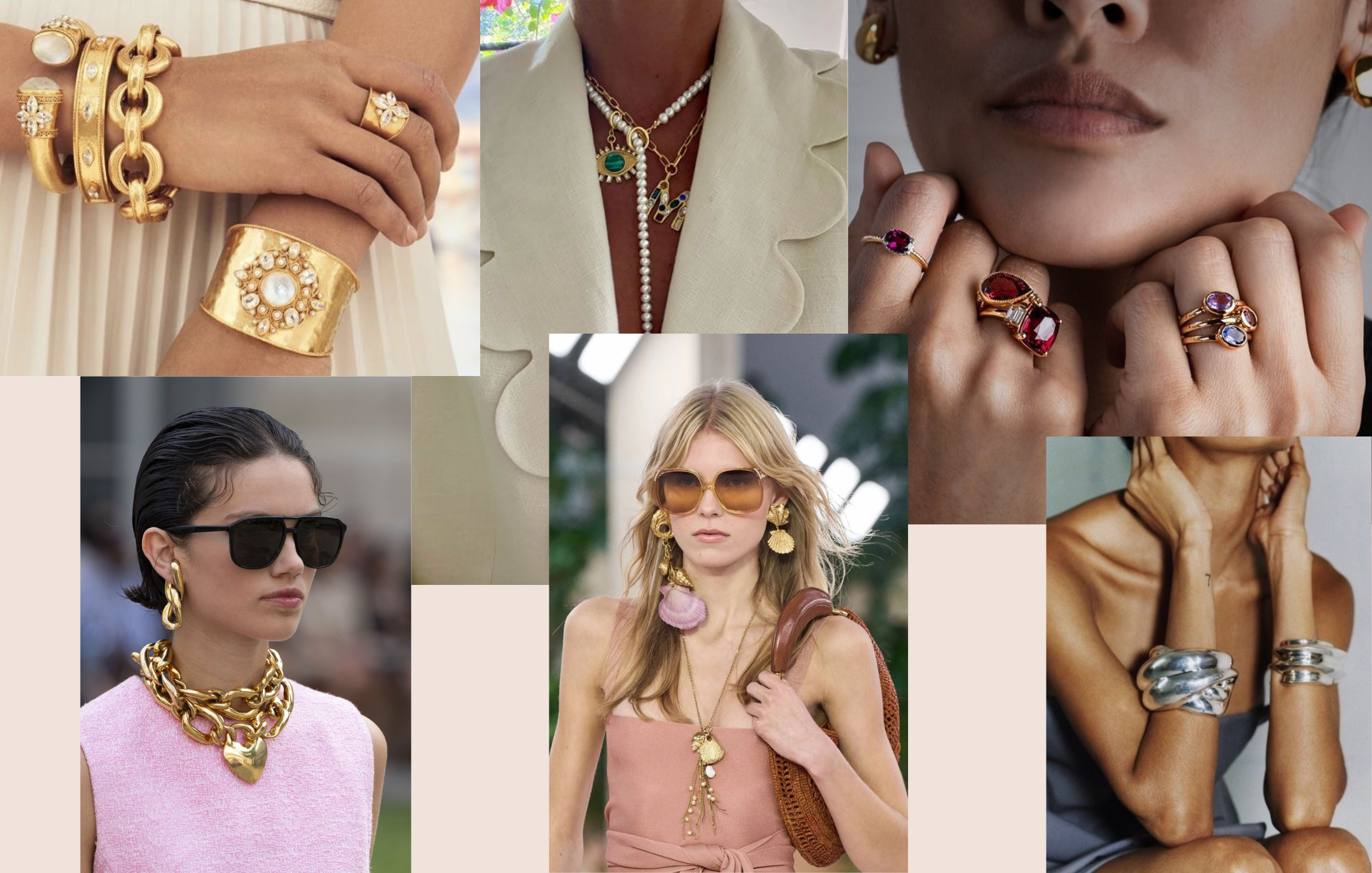
Spring styling gets treated like a costume change. Sweaters swap for linen, boots for sandals, and the accessories drawer needs a rethink too. Jewelry for spring isn’t really about a wholesale swap, though. Lighter fabrics change how metal catches light, warmer skin tones shift what feels flattering, and the volume of ambient sparkle in a room drops as puffer coats disappear, which means smaller pieces get their moment back.
What actually earns a spot in daily rotation from March through June? And what carries into July without looking off?
Why spring changes the rules
Winter jewelry does a lot of heavy lifting. Chunky chains read as intentional against black wool; statement earrings survive being half-hidden by scarves. Once the layers come off, proportion shifts. A chain that looked balanced under a turtleneck can look aggressive against a t-shirt neckline. Cuffs that vanished under sleeves become the whole visual event of an outfit.
There’s a light situation too. Spring daylight is longer and softer than winter’s flat gray, and stones that looked inert in December start doing something by April. Yellow gold warms up considerably in natural light, which is part of why it dominates spring editorial shoots at places like Tiffany and Mejuri.
Humidity matters, though it rarely gets discussed. Sterling silver tarnishes faster in wet air. Costume pieces with base metals plated in gold start showing wear at the clasp points by early summer, which is why the $40 tennis bracelet from a fast-fashion retailer looks tired by June while a proper one keeps going. Quality becomes visible in spring because the pieces on the body get looked at more directly.
The pieces doing real work this season
Dome and puffed shapes have taken over. Puffed hoops, dome rings, rounded pendants. Bottega Veneta pushed the silhouette on the runway a few seasons back and it has trickled down to every price point since. Part of the appeal is practical: a dome ring doesn’t catch on knit sleeves the way a raised prong setting does, and puffed hoops sit lighter on the earlobe than their weight suggests.
Tennis bracelets and necklaces have moved out of formalwear territory. They get stacked with watches, layered against simpler chains, worn to lunch. A continuous line of stones catches spring light in a way that feels alive rather than showy, especially in lab-grown diamonds, where the price of entry has dropped enough that a $2,000 bracelet is no longer an heirloom-level commitment.
Mixed shapes have replaced matched sets. The old rule that earrings should match a pendant, which should coordinate with a ring, has been abandoned, and honestly that’s a relief. A pear-cut stud paired with an emerald-cut pendant and a round solitaire ring now looks considered rather than chaotic. People can wear what they own instead of curating perfect sets.
Stacking has matured. Early stacking was maximalist by default, as many rings and bracelets as would physically fit. Now it’s two or three rings per hand, chosen for how they interact rather than how they fill space. A plain band next to a pave eternity next to a signet creates rhythm. Ten rings creates noise.
Colors and metals that read as spring
Yellow gold is having a long moment and spring extends it. The warmth reads well against pastels, denim, and the neutrals that dominate transitional dressing. Rose gold has receded, though it hasn’t disappeared. White gold and platinum still anchor engagement and wedding pieces but feel quieter in casual styling.
Colored stones deserve attention. Not the deep jewel tones of fall, the paler end of the spectrum: aquamarine, morganite, pale sapphires, peridot. Pearls too, particularly baroque and freshwater shapes rather than the perfectly round strands, have moved from grandmother territory to something genuinely current.
Enamel is having a run. Colorful enamel on gold, whether signet rings or hoop earrings, adds a playfulness that spring dressing can absorb without looking costumey. It’s also durable enough to survive being put on at 7 a.m. and forgotten about.
For a broader look at what’s showing up across seasonal collections and how the spring pieces evolve as temperatures climb, this rundown of spring and summer jewelry trends covers the dome shapes, tennis stacking, and lab-grown diamond styles in more detail.
How to actually wear it without looking overdone
The common mistake in spring dressing is treating jewelry as a separate decision from the outfit. A great necklace can compete with a strong neckline. A stack of bracelets can fight with a watch. Rings need to account for what the hands are doing all day, whether that’s typing, cooking, or holding a coffee cup.
Neckline dictates chain length. A crew neck wants a chain that sits above or well below the collar, not right at it. A v-neck can handle a longer pendant. Off-shoulder or strapless benefits from a shorter, more defined piece rather than a long floating chain.
Hair up means earrings become the focal point and can go bigger. Hair down means earrings get glimpsed rather than displayed, which favors sparkle and movement over size.
Long sleeves mean bracelets need to work with fabric, which usually means fewer and flatter. Short sleeves and sleeveless are where stacking earns its keep.
Metal mixing works, but needs one repeated element. A yellow gold necklace with a white gold ring works if there’s a two-tone piece somewhere to bridge them. Otherwise it looks like getting dressed in the dark.
What’s likely to matter into 2026
Predicting spring 2026 is partly guesswork. Lab-grown diamonds have moved past novelty and into default status for many buyers, particularly for tennis pieces and everyday studs where the ability to wear real stones without insurance anxiety changes behavior. The category will keep expanding into pieces that would have been considered too risky in mined stones, cocktail rings, bigger drop earrings, longer riviere necklaces.
Dome and sculptural shapes show no signs of receding. If anything they’re getting bigger and more architectural. Wider cuffs, more dramatic pendants, some of it verging on impractical.
Personalization has moved past the initial-necklace phase into subtler territory. Custom stone combinations, birthstone integration into otherwise classic pieces, made-to-order sizing on tennis bracelets, all quietly growing.
The pieces that worked last spring will keep working, which is the useful news for anyone building a collection rather than chasing seasons.
The short version
Good spring jewelry rewards restraint and specificity. A few well-chosen pieces in warm metals, worn in combinations that account for proportion and neckline, will do more than a drawer full of trend purchases. The season is forgiving of experimentation because the light is generous and the layers are minimal, which means small choices show up clearly. Depending on how the drawer currently looks, that’s either an opportunity or a warning.
 DigiTaxa